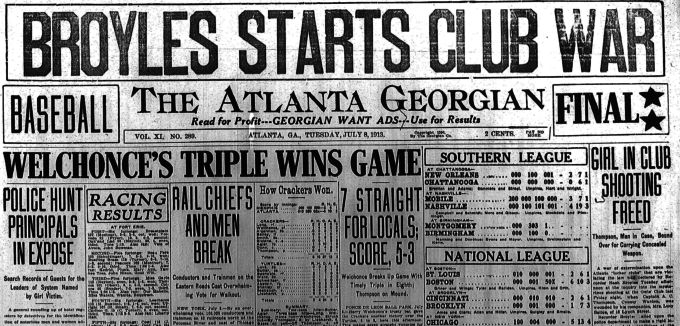
Police Hunt Principals in Expose

Another in our series of new transcriptions of contemporary articles on the Leo Frank case.

The Atlanta Georgian

Tuesday, July 8, 1913

Search Records of Guests for the Leaders of System Named by Girl Victim.

A general rounding up of hotel registers by detectives for the identification of notorious men and women added the latest sensation in the vice investigation instituted following the startling disclosures of Hattie Smith, the pretty 17-year-old girl, who claims to be the victim of the “system.”

The first move was made Tuesday morning when the manager of the Cumberland Hotel was subpenaed to appear in Police Court with his register that afternoon. The register will be examined by the Smith girl to identify the names of men and women who, she claims, frequent the hotel.

Detectives say they will examine every hotel register figuring in this latest expose to identify the names of parties involved. In each case the register will be searched carefully and the name of every person noted as to character and general reputation.

Get Evidence for Court.
Continue Reading →

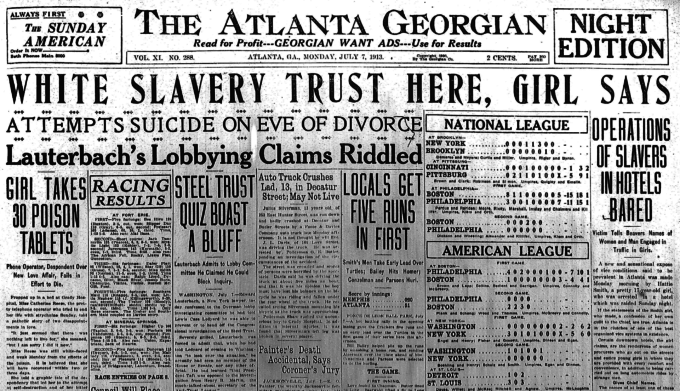
Operations of Slavers in Hotels Bared

Another in our series of new transcriptions of contemporary articles on the Leo Frank case.

The Atlanta Georgian

Monday, July 7, 1913

Victim Tells Beavers Names of Women and Man Engaged in Traffic in Girls.

A new and sensational expose of vice conditions said to be prevalent in Atlanta was made Monday morning by Hattie Smith, a pretty 17-year-old girl, who was arrested in a hotel which was raided Sunday night.

If the statements of the Smith girl, who made a confession of her own guilt to the Chief, are true, Atlanta is in the clutches of one of the best organized vice systems in existence.

Certain downtown hotels, the girl claims, are the rendezvous of women procurers who go out on the streets and entice young girls in where they are provided with every comfort and convenience, in addition to being carried out on long automobile rides by strange men.

Gives Chief Names.

Continue Reading →

Lee’s Attorney is Ready for Writ Fight

Another in our series of new transcriptions of contemporary articles on the Leo Frank case.

The Atlanta Georgian

Monday, July 7, 1913

Habeas Corpus Move to Free Negro in Phagan Case Due to Start Monday.

Habeas corpus proceedings in behalf of Newt Lee, negro night watchman at the National Pencil Factory, were promised Monday by the negro’s attorney, Bernard L. Chappell. Settlement of this phase of the Phagan murder mystery will determine definitely the status of the negro.

It is known that the State regards Lee as a material witness in building up its case against Frank. The attitude of Mr. Chappell is that his client knows no more about [the] crime than he already has told, and should therefore be freed. Lee has told the detectives nothing which links any man directly with the crime. By the defense, his story is held to point to the guilt of Leo Frank no more than to the guilt of Conley.

The State, however, will fight any effort to give the negro his liberty. Solicitor Dorsey fears that Lee will get out of the jurisdiction of the court once he is permitted his freedom.

The battle over Lee is the only outward sign of activity in the Phagan case etiher [sic] by the defense or the prosecution, but it is known that the defense is busily engaged completing its case. One new witness was interviewed Saturday by Frank’s lawyers, and his affidavit taken before a notary public. A strong net is being woven about Conley. The nature of the testimony is being kept secret, but it is known that the defense expects to free Frank by showing that it was Conley who committed the crime. The negro is said to be enmeshed in the testimony in the hands of the defense.

Despite rumors of another postponement, attorneys for the defense and prosecution said Monday that they would be ready to go ahead with the case at the time set for trial, July 28, and that they knew of no reason for further delay.

Jury to Consider Indicting Conley.

What was considered a direct reference to the Phagan case was made in the charge of Superior Judge George L. Bell to the Grand Jury Monday morning. He said he wanted to place particular emphasis on recent “horrible homicides” and urged the jury to probe deep in an effort to find clews that would lead to perpetrators.

The Grand Jury was organized at 9 o’clock Monday morning with W. D. Beattie foreman. Judge Bell made one of the shortest charges ever delivered in a Fulton County courtroom.

Immediately following the charge the jury went into executive session to consider bills presented by the Solicitor’s office. After to-day’s session the calendar of criminal business will be disposed of, and the jury will have every opportunity to take up any matters it might see fit.

A meeting will be called later in the week when a definite plan of action will be outlined for the term. It was regarded as likely that the Phagan case would be reopened and an indictment against Jim Conley considered.

Other matters that might be taken up are recent developments with the police department, in which eight patrolmen were suspended for alleged corruption, the counter charges of corruption made by them and charges of open vice.

* * *

The Atlanta Georgian, July 7th 1913, “Lee’s Attorney is Ready for Writ Fight,” Leo Frank case newspaper article series (Original PDF)

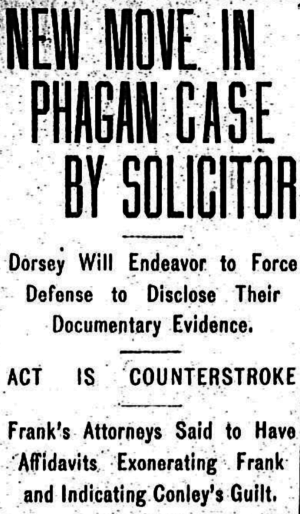
New Move in Phagan Case by Solicitor

Another in our series of new transcriptions of contemporary articles on the Leo Frank case.

The Atlanta Georgian

Sunday, July 6, 1913

Dorsey Will Endeavor to Force Defense to Disclose Their Documentary Evidence.

ACT IS COUNTERSTROKE

Frank’s Attorneys Said to Have Affidavits Exonerating Frank and Indicating Conley’s Guilt.

A sensational turn in the Phagan murder mystery, according to one of the attorneys for the defense, will develop next week when Solicitor General Hugh M. Dorsey issues a subpena duces tecum on Attorneys Luther Z. Rosser and Reuben Arnold, citing them to produce all the affidavits they have secured that bear on the crime.

The movement is in the nature of a counterstroke to block the pending subpenas duces tecum filed by the defense, citing the State to produce all the affidavits that have been secured.

The defense strongly maintains that it will win its point and that the prosecution will suffer. The attorneys say that the Constitution of the State clearly outlines the action of the court in such matters—”that the defendant is entitled to be faced with all the evidence against him”—while the prosecution will labor under the handicap that “a defendant is innocent until he is proven guilty.”

Dorsey Is Silent.

While no announcement would be made by Solicitor Dorsey relative to the contemplated subpenas duces tecum, it was intimated by him that such action might be taken at an early date, and that when it was the defense and the prosecution would lock horns in the first decisive battle in the sensational case.

Affidavits that are sought by the defense are the three different sworn statements of the negro, Jim Conley, the affidavit given by the negro cook at the Frank home, Minola McKnight, the Formby affidavit and the affidavit of Monteen Stover, the girl who stated that she entered Frank’s office at a time when he said he was there, and found the office deserted.

The State will seek to obtain affidavits contradicting their theory and placing the crime on the negro sweeper, Jim Conley. These affidavits are said to deal principally with the time different witnesses entered and left the factory April 26, the most vital question in the trial.

Affidavits of Defense.

The defense is said to be in possession of affidavits that show Monteen Stover entered and departed from the factory before Mary Phagan’s car reached the heart of the city; that the negro Jim Conley entered the factory earlier in the day than he said he did, and that he, instead of the indicted pencil factory superintendent, committed the murder, because the superintendent left the factory at least ten minutes before Conley said he helped him dispose of the body, and that the Formby affidavit, a one-time sensational bit of evidence substantiating the defense, was given by the woman at the behest of the police detectives without regard for its accuracy, and that Mrs. Formby has since admitted that she never knew Leo M. Frank or heard of him until he was held as a suspect in connection with the murder.

* * *

The Atlanta Georgian, July 6th 1913, “New Move in Phagan Case by Solicitor,” Leo Frank case newspaper article series (Original PDF)

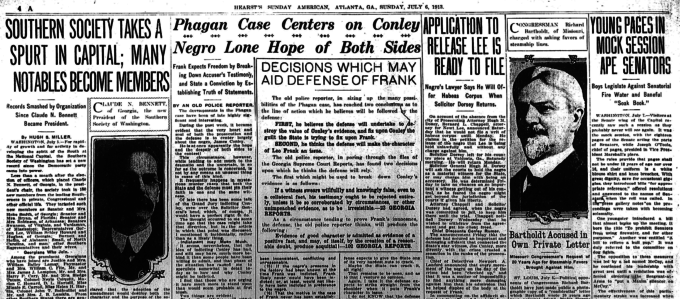
Phagan Case Centers on Conley; Negro Lone Hope of Both Sides

Another in our series of new transcriptions of contemporary articles on the Leo Frank case.

The Atlanta Georgian

Sunday, July 6, 1913

*Editor’s Note: See insert article, “Decisions Which May Aid Defense of Frank”, at the conclusion of this post.

Frank Expects Freedom by Breaking Down Accuser’s Testimony, and State a Conviction by Establishing Truth of Statements.

BY AN OLD POLICE REPORTER.

The developments in the Phagan case have been of late highly significant and interesting.

During the past week, it became evident that the very heart and soul of both the prosecution and the defense is to center largely about the negro, James Conley.

He is at once apparently the hope and the despair of both sides to the contest!

This circumstance, however, while tending to add much to the dramatic and the uncertain, in so far as the outcome is concerned, is not by any means an unusual thing in cases of this kind.

It frequently happens in mysterious murder cases that both the State and the defense must pin their faith to one and the same witness.

Of late there has been some talk of the Grand Jury indicting Conley, even over the Solicitor General’s head, which, of course, it would have a perfect right to do.

The thought occurred to me some time ago that the case might take that direction, but in the article in which that point was discussed, I mentioned it incidentally, rather than as a likely thing.

Indictment may Mean Much.

Continue Reading →

Application to Release Lee is Ready to File

Another in our series of new transcriptions of contemporary articles on the Leo Frank case.

The Atlanta Georgian

Sunday, July 6, 1913

Negro’s Lawyer Says He Will Offer Habeas Corpus When Solicitor Dorsey Returns.

On account of the absence from the city of Prosecuting Attorney Hugh M. Dosey [sic], Bernard L. Chappell, attorney for Newt Lee, announced Saturday that he would not file a writ of habeas corpus until Monday. He claims in the petition for the release of the negro that Lee is being held unlawfully and without any charge against him.

Solicitor Dorsey left for his country place at Valdosta, Ga., Saturady [sic] morning. He will return Monday.

Solicitor General Hugh M. Dorsey will ask the courts to hold the negro as a material witness for the State, or may charge him with being an accessory. He was determined Friday to take no chances on so important a witness getting out of his control, as he feared the negro might get beyond the jurisdiction of the courts if given his liberty.

Attorney Chappell and Solicitor Dorsey had agreed, when the negro was committed to jail, to keep him there until the trial. Chappell notified Dorsey Wednesday that he wished to withdraw from the agreement and get his client freed.

Chief Discounts Conley Rumor.

The announcement Friday that the defense had secured an important and damaging affidavit that connected the State’s star witness, Jim Conley, more directly with the crime created a sensation in the ranks of the prosecution.

Chief of Detectives Newport A. Lanford announced that every movement of the negro on the day of the crime had been “checked up,” and that it was a matter of impossibility to find anything more damaging against him than his admission that he helped dispose of the body at the request of Frank.

In commenting on the affidavit secured at the office of Joseph H. Leavitt Thursday the attorney said that it would be almost impossible for the prosecution to break down any statement that was made in the affidavit when the witness was placed on the stand.

Calls Evidence Vital.

He said the witness was a citizen of high standing and would be one of the most important for the defense of Frank.

Attorney Leavitt said that this particular affidavit was one of more than 50 that had been recently secured that dealt almost exclusively with the movements of the negro on the day of the murder. While he would not comment at any length, he intimated that the defense had been able to establish conclusively the exact time Conley entered and left the factory.

He also intimated that affidavits had been secured that would show what time Monteen Stover entered and left the factory and be able to prove she left before Mary Phagan’s car reached the vicinity of the pencil factory.

* * *

The Atlanta Georgian, July 6th 1913, “Application to Release Lee is Ready to File,” Leo Frank case newspaper article series (Original PDF)

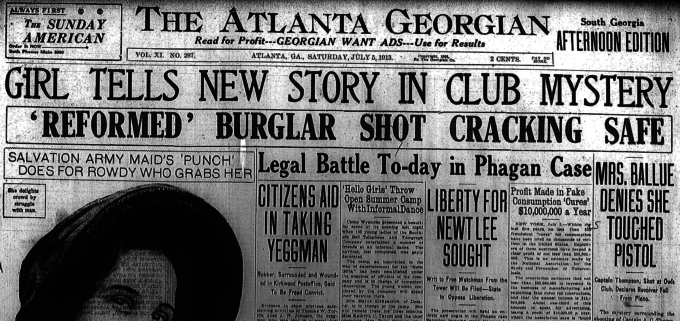
Liberty for Newt Lee Sought

Another in our series of new transcriptions of contemporary articles on the Leo Frank case.

The Atlanta Georgian

Saturday, July 5, 1913

Writ to Free Watchman From the Tower Will Be Filed—State to Oppose Liberation.

The prosecution will fight an entirely new angle in the Phagan case Saturday morning when Barnard [sic] L. Chappell, attorney for Newt Lee, the negro night watchman, files a writ of habeas corpus for the release of the negro from the Tower, where he is being held without any charge against him.

Solicitor General Hugh M. Dorsey will ask the courts to hold the negro as a material witness for the State, or may charge him with being an accessory. He was determined Friday to take no chances on so important a witness getting out of his control, as he feared the negro might get beyond the jurisdiction of the courts if given his liberty.

Attorney Chappell and Solicitor Dorsey had agreed, when the negro was committed to jail, to keep him there until the trial. Chappell notified Dorsey Wednesday that he wished to withdraw from the agreement and get his client freed.

Chief Discounts Conley Rumor.

Continue Reading →

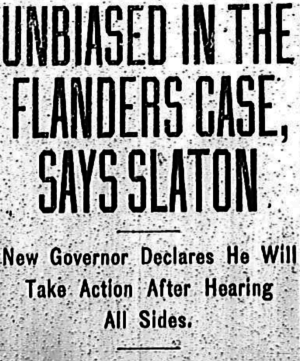
Unbiased in the Flanders Case, Says Slaton

Another in our series of new transcriptions of contemporary articles on the Leo Frank case.

The Atlanta Georgian

Saturday, July 5, 1913

New Governor Declares He Will Take Action After Hearing All Sides.

Governor Slaton has formed no opinion in the famous McNaughton-Mattie Flanders murder case, and says he will make no decision until he has heard all sides. The new Governor says he has not talked to the former Governor about the case. He will hear, he said, all arguments without prejudice.

It is known that the hopes of McNaughton’s friends for commutation of sentence, if not pardon, have been greatly strengthened now that Governor Slaton is in the executive office.

The statement, made time and again, to the effect that Mrs. Mattie Flanders, alleged co-conspirator with Dr. W. J. McNaughton, never will be tried, has been renewed now that Governor Brown, who stood so long between Dr. McNaughton and the gallows, has been succeeded.

It was said months ago to be the purpose of those urging that the law be permitted to take its course against Dr. McNaughton to kick the case along from one court to another until a change in administrations had been effected in Atlanta. Governor Brown let it be known all along that he would not permit Dr. McNaughton to hang so long as the case against Mrs. Flanders remained undisposed of.

Waiting Game Played.

Continue Reading →

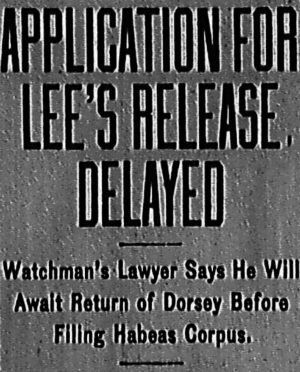
Application for Lee’s Release Delayed

Another in our series of new transcriptions of contemporary articles on the Leo Frank case.

The Atlanta Georgian

Saturday, July 5, 1913

Watchman’s Lawyer Says He Will Await Return of Dorsey Before Filing Habeas Corpus.

On account of the absence form the city of Prosecuting Attorney Hugh M. Dorsey, Bernard L. Chappell, attorney for Newt Lee, announced Saturday that he would not file a writ of habeas corpus until Monday. He claims in the petition for the release of the negro that Lee is being held unlawfully and without any charge against him.

Solicitor Dorsey left for his country place at Valdosta, Ga., Saturday morning. He will return Monday.

Continue Reading →

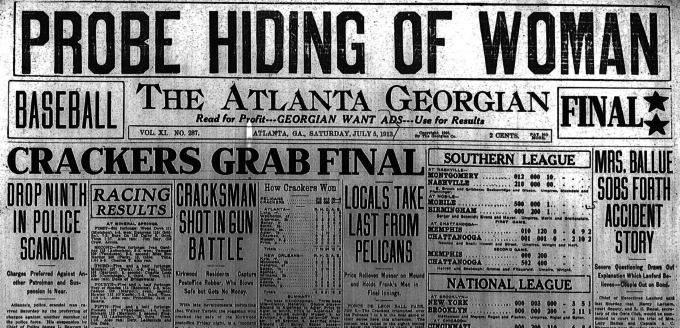
Drop Ninth in Police Scandal

Another in our series of new transcriptions of contemporary articles on the Leo Frank case.

The Atlanta Georgian

Saturday, July 5, 1913

Charges Preferred Against Another Patrolman and Suspension Is Near.

Atlanta’s police scandal was revived Saturday by the preferring of charges against another member of the police force. His suspension by Chief of Police James L. Beavers is expected to follow within a few hours.

The subject of the accusations is the ninth policeman involved in the scandal. Chief Beavers would not make public the man’s name until formal order of suspension was made.

The charges against the majority of the policemen are they they frequented the notorious negro resort in the rear of 127 Auburn Avenue and that certain of the men were in the habit of drinking there. The place has no license and one of the officers, against whom there was no evidence of drinking, was charged simply with permitting the place to run without reporting it.

With the preferring of the ninth set of charges came the information that R. A. Wood, the policeman who tendered his resignation as soon as the story of his alleged visits to the resort was made public, had sold all his household belongings and moved from the city.

Officers who went to serve notice of the trial before the Police Commission next Tuesday night were met with the information that he had moved with his family to Texas.

* * *

The Atlanta Georgian, July 5th 1913, “Drop Ninth in Police Scandal,” Leo Frank case newspaper article series (Original PDF)

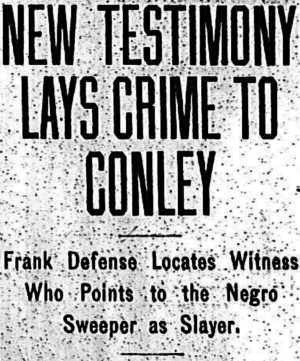
New Testimony Lays Crime to Conley

Another in our series of new transcriptions of contemporary articles on the Leo Frank case.

The Atlanta Georgian

Friday, July 4, 1913

Frank Defense Locates Witness Who Points to the Negro Sweeper as Slayer.

A new witness, said to have the most damaging evidence yet produced against Jim Conley, the negro sweeper in the National Pencil factory, entered the Phagan case Thursday and made an affidavit, the contents fo [sic] which are carefully guarded by attorneys for Leo M. Frank, charged with causing the death of the factory girl.

The identity of the witness is as much a secret as the exact nature of his testimony. It was learned, though, that the affidavit was made in the law office of Joseph Leavitt in the Grant Building and was witnessed by Mr. Leavitt’s stenographer.

It is said the testimony of this man connects Conley more directly with the crime than any other statement or affidavit yet procured by the defense. The witness is understood to have seen Conley on the afternoon of the crime and to have heard him make remarks in his drunken condition which were extremely incriminating. Continue Reading →

Writ Sought In Move to Free Negro Lee

Another in our series of new transcriptions of contemporary articles on the Leo Frank case.

The Atlanta Georgian

Thursday, July 3, 1913

Attorney for Watchman Declares Client Knows Nothing of the Actual Crime.

Bernard L. Chappell, attorney for Newt Lee, negro night watchman at the pencile [sic] factory, held in the Phagan case, stated Thursday morning that he would swear out a writ of habeas corpus for the release of the negro.

Attorney Chappell stated that he had come to the conclusion that there was nothing the negro knew about the crime except finding the body, and that the State had no right to keep him without some charge or as a material witness.

Lee was the first suspect arrested in connection with Mary Phagan’s murder. He was ordered held by the Coroner, but when a bill of indictment was offered the Grand Jury at the same time of the Frank indictment, no action was taken against the negro.

Weak Spots in Conley Tale.

Chappell said the writ of habeas corpus would compel the State either to order the negro held as a material witness or make some charge against him.

Conley, in relating his dramatic tale of carrying the body of Mary Phagan from the rear of the second floor and disposing of it at the direction of Frank in a dark corner of the gloomy basement, said that when he reached the elevator he had to wait until Frank went into his office for a key to the elevator door.

The defense will maintain, it is understood, that the elevator door had not been locked for some time. Witnesses will be called to testify that the door had remained unlocked in accordance with instructions from the firms with which the building was insured. From this alleged circumstance, it will be argued that the negro’s story is a fabrication devised to shield himself from the charge of murder and to shift the responsibility onto another man.

Continue Reading →

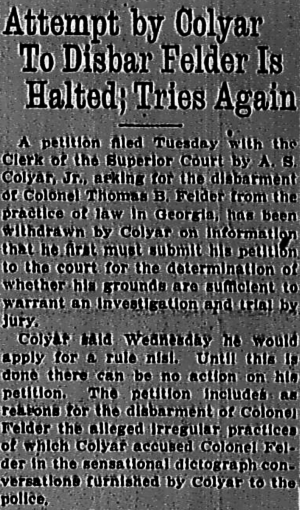
Attempt by Colyar To Disbar Felder Is Halted; Tries Again

Another in our series of new transcriptions of contemporary articles on the Leo Frank case.

The Atlanta Georgian

Thursday, July 3, 1913

A petition filed Tuesday with the Clerk of the Superior Court by A. S. Colyar, Jr., asking for the disbarment of Colonel Thomas B. Felder from the practice of law in Georgia, has been withdrawn by Colyar on information that he first must submit his petition to the court for the determination of whether his grounds are sufficient to warrant an investigation and trial by jury.

Colyar said Wednesday he would apply for a rule nisi. Until this is done there can be no action on his petition. The petition includes as reasons for the disbarment of Colonel Felder the alleged irregular practices of which Colyar accused Colonel Felder in the sensational dictograph conversations furnished by Colyar to the police.

* * *

The Atlanta Georgian, July 3rd 1913, “Attempt by Colyar To Disbar Felder Is Halted; Tries Again,” Leo Frank case newspaper article series (Original PDF)

Findings in Probe are Guarded

Another in our series of new transcriptions of contemporary articles on the Leo Frank case.

The Atlanta Georgian

Wednesday, July 2, 1913

No Indication Given of Results of Investigation of Reports of Disorderly Houses.

The result of the Grand Jury’s sensational vice probe of a few weeks ago will be made known Wednesday when the presentments are returned to Superior Judge W. D. Ellis, who two months ago charged that an extensive investigation be made.

Save when an indictment was returned against Police Commissioner W. P. Fain, which charged him with keeping a disorderly house and beating one of the women inmates, no inkling of the general trend of the probe got beyond the closed doors of the jury room.

When the probe first started the jury expected it to be completed in a day. It took a sensational turn when Colonel Thomas B. Felder charged Chief of Detectives Newport Lanford and his detectives with openly protecting vice, and the attorney stated he could submit to the jury a “vice list” that would “stand Atlanta on its head.”

List Given to Jury.

Continue Reading →

“No” Bill Is Returned Against A. S. Colyar

Another in our series of new transcriptions of contemporary articles on the Leo Frank case.

The Atlanta Georgian

Tuesday, July 1, 1913

Grand Jury Declines to Indict Colyar for Reply to Attack of Colonel Felder

[…]charging A. S. Colyar, of Nashville, with libel, the Fulton county grand jury at its session on Tuesda ymorning [sic] refused to indict the Tennessean, returning a “no bill” in the case. Mr. Colyar has been in the limelight recently as a principal in the sensational dictograph episode, and has been engaged in a heated controversy with Colonel Thomas B. Felder.

The Tennessean was charged specifically with libelling Mr. Felder in a card published over his signature in The Journal of June 8, in which he excoriated the Atlanta lawyer.

The grand jury had the bill drawn of its own initiative, it is said, and considered it Tuesday morning. The only witness called before the grand jury was John Paschall, city editor of The Atlanta Journal.

In answer to questions of the grand jurors, Mr. Paschall stated that the card was furnished for publication by Mr. Colyar. Colyar has been given an opportunity to reply to an attack on his character, which Mr. Felder had embodied in a card, addressed to the editor of The Journal and which was published on the same day, the newspaper man told the jury in answer to further questions.

Attached to the bill, which was drawn against Mr. Colyar, was a copy of his card.

The grand jury was in session more than an hour considering the bill, before its decision not to return an indictment was reached.

* * *

The Atlanta Georgian, July 1st 1913, “”No” Bill Is Returned Against A. S. Colyar,” Leo Frank case newspaper article series (Original PDF)

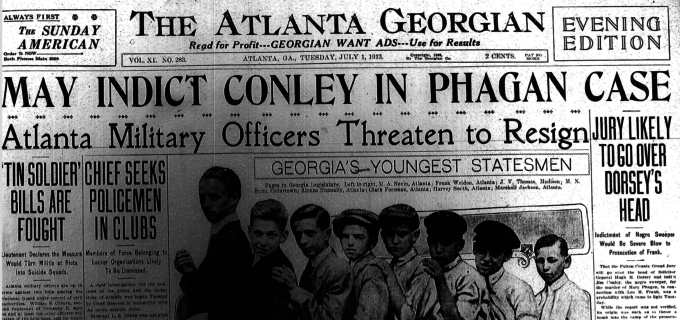
May Indict Conley in Phagan Case

Another in our series of new transcriptions of contemporary articles on the Leo Frank case.

The Atlanta Georgian

Tuesday, July 1, 1913

JURY LIKELY TO GO OVER DORSEY’S HEAD

Indictment of Negro Sweeper Would Be Severe Blow to Prosecution of Frank.

That the Fulton County Grand Jury will go over the head of Solicitor General Hugh M. Dorsey and indict Jim Conley, the negro sweeper, for the murder of Mary Phagan, in connection with Leo M. Frank, was a probability which came to light Tuesday.

While the report was not verified, its origin was such as to throw a bomb into the camp of the prosecution, as it will mean the indictment of the star witness in the State’s case against Frank.

In the event that Conley is indicted it will mean also that he will be taken from the custody of the police, where he has been carefully guarded from the defense, and will be placed in the county jail, where Frank is being held.

Rumors that Newt Lee, negro night watchman at the National Pencil factory, had made sensational disclosures to his attorney, Bernard L. Chappell, and would be one of the State’s most important witnesses in the trial of Leo M. Frank, were set at rest Tuesday by Mr. Chappell.

The negro’s attorney said after the inquest that he would make no effort to procure the release of Lee, as he believed his client was a vital witness and it would be the wisest plan for him to remain in the protection of the State.

His statements at this time and up to the date of the indictment found against Frank led to the impression that Lee had confided in his lawyer significant circumstances which he had told neither to the detectives nor to the members of the Coroner’s jury.

Denies Confession Reports.

Continue Reading →

Colyar Indicted as Libeler of Col. Felder

Another in our series of new transcriptions of contemporary articles on the Leo Frank case.

The Atlanta Georgian

Tuesday, July 1, 1913

Grand Jury Develops Sensational Sequel to Famous Dictograph Scandal.

A. S. Colyar, Jr., dictographer of Colonel Thomas B. Felder, Mayor Woodward and C. C. Jones, was indicted by the Grand Jury on the charge of criminal libel Tuesday forenoon.

Colyar is the man who sought to trap Colonel Felder by means of the dictograph into offering a bribe of $1,000 for certain affidavits in the Phagan case in the possession of the police. The dictograph records as furnished an afternoon newspaper by Colyar contained the offer.

Colonel Felder swore the records were padded. Largely on Colonel Felder’s representations, the indictment was procured. John Pascal, of The Journal, was the only witness called by the Grand Jury in considering Colyar’s case.

Chief of Detectives Lanford and Colonel Felder, indicted last week by the Grand Jury, obtained their freedom by making a $500 bond. It was expected that the same bond would be imposed upon Colyar.

Much of the time Tuesday was occupied by members of the Grand Jury in probing into police affairs. Without calling any witnesses, the scandal which has shaken the department was given serious consideration for nearly two hours. The result of the discussion was not made public.

* * *

The Atlanta Georgian, July 1st 1913, “Colyar Indicted as Libeler of Col. Felder,” Leo Frank case newspaper article series (Original PDF)

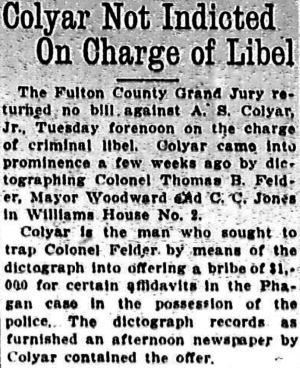
Colyar Not Indicted On Charge of Libel

Another in our series of new transcriptions of contemporary articles on the Leo Frank case.

The Atlanta Georgian

Tuesday, July 1, 1913

The Fulton County Grand Jury returned no bill against A. S. Colyar, Jr., Tuesday forenoon on the charge of criminal libel.  Colyar came into prominence a few weeks ago by dictographing Colonel Thomas B. Felder, Mayor Woodward and C. C. Jones in Williams House No. 2.

Colyar is the man who sought to trap Colonel Felder by means of the dictograph into offering a bribe of $1,000 for certain affidavits in the Phagan case in the possession of the police. The dictograph records as furnished an afternoon newspaper by Colyar contained the offer.

* * *

The Atlanta Georgian, July 1st 1913, “Colyar Not Indicted On Charge of Libel,” Leo Frank case newspaper article series (Original PDF)

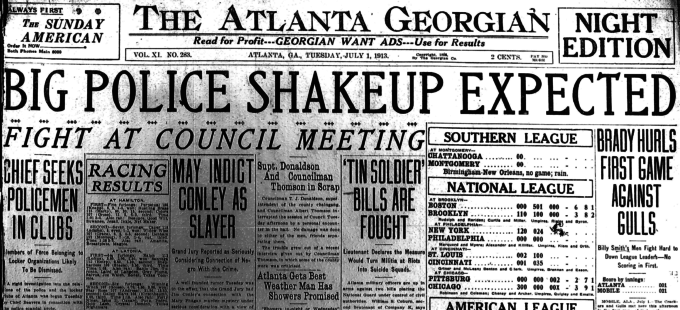
May Indict Conley as Slayer

Another in our series of new transcriptions of contemporary articles on the Leo Frank case.

The Atlanta Georgian

Tuesday, July 1, 1913

Grand Jury Reported as Seriously Considering Connection of Negro With the Crime.

A well founded rumor Tuesday was to the effect that the Grand Jury had Jim Conley’s connection with the Mary Phagan murder mystery under serious consideration with a view of finding an indictment against the negro on the charge of causing the death of the little factory girl.

Announcement was made after the close of Tuesday’s session that the present Grand Jury would hold its last session Wednesday, and it was reported that if action were not taken on Conley’s case before adjournment, recommendations would be left with the next Grand Jury suggesting that the negro’s connection with the crime be rigidly investigated.

If the indictment is returned against the negro it will mean that he will be taken from the custody of the detectives and placed in the Tower. He also will bear a different relation to the case in the future, being a defendant instead of a material witness. Attorneys interested in the case said they had heard nothing of the proposed action by the Grand Jury.

Rumors that Newt Lee, negro night watchman at the National Pencil factory, had made sensational disclosures to his attorney, Bernard L. Chappell, and would be one of the State’s most important witnesses in the trial of Leo M. Frank, were set at rest Tuesday by Mr. Chappell.

The negro’s attorney said after the inquest that he would make no effort to procure the release of Lee, as he believed his client was a vital witness and it would be the wisest plan for him to remain in the protection of the State.

His statements at this time and up to the date of the indictment found against Frank led to the impression that Lee had confided in his lawyer significant circumstances, which he has told neither to the detectives nor to the members of the Coroner’s jury.

Denies Confession Reports.

Continue Reading →

Frank Is Willing for State to Grill Him

Another in our series of new transcriptions of contemporary articles on the Leo Frank case.

The Atlanta Georgian

Tuesday, July 1, 1913

Accused Man Declares He’s Anxious Even for Prosecution to Cross-Examine.

Surpassing in interest any of the other testimony at the trial of Leo M. Frank will be the story related on the stand by the accused man himself. That Frank will make a detailed statement of his movements on the day that Mary Phagan was murdered is regarded as one of the certainties of the trial.

It was learned Wednesday that Frank was desirous of going even further than this by being sworn and submitting to a cross-examination by the attorneys for the prosecution. He will request his lawyers, Luther Z. Rosser and Reuben R. Arnold, that the privilege of cross-examination be extended the State.

Continue Reading →