
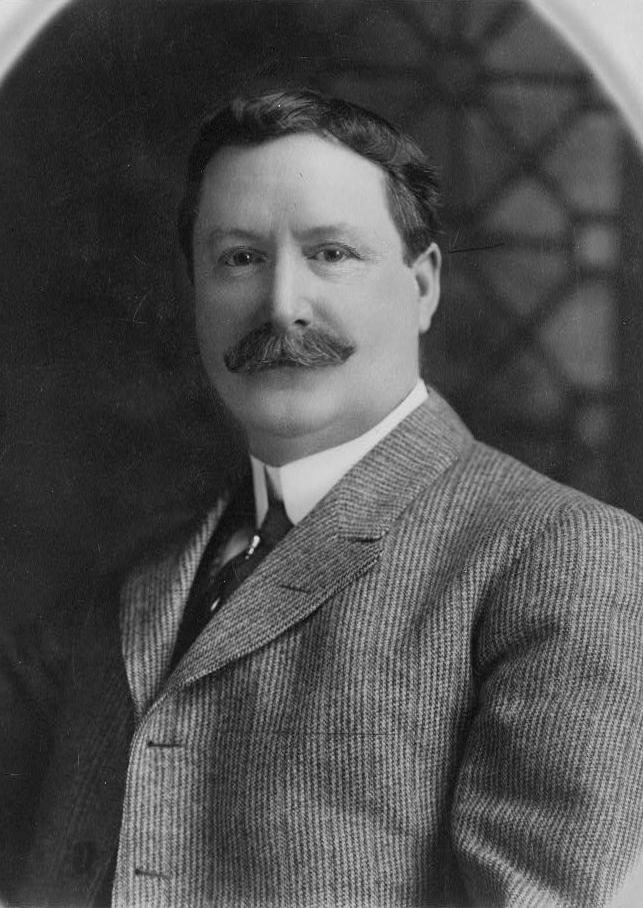
William J. Burns and the Great Leo Frank Case Carnival
Introduction
IN 1914, six days short of the first anniversary of the strangulation-murder of 13-year-old Mary Phagan by Jewish businessman and B’nai B’rith official Leo M. Frank on Confederate Memorial Day, 1913, the Frank case entered its most frenetic public phase. A major legal decision was slated to be dropped in a few days. By then, Frank had already been convicted of the gruesome murder of Mary. But Frank’s defense team, flush with money from a national publicity campaign, was furiously working to get witnesses to reverse their testimony, and get Frank a new trial or exonerated one way or another — an exoneration effort that still continues today, led by Jewish groups including the ADL (Anti-Defamation League).
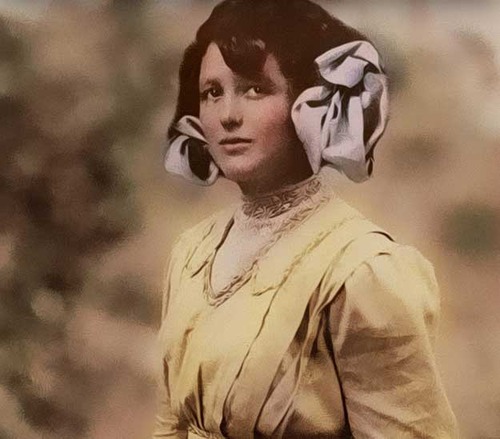
Famed — some would say notorious — private detective William J. Burns (hired months earlier by the Frank defense and paid out of a nationally-raised fund organized by wealthy Jewish businessmen Albert Lasker of Chicago and Adolph Ochs and Louis Marshall of New York) returned to Atlanta, where Mary’s murder had taken place, by train from a secretive trip to the “Big Apple” and announced he was ready at last to deliver his long-promised report on the case, a document he had been teasing in the national press since early April.
Across town at Atlanta Police Headquarters, State’s witness Albert McKnight sat in a self-requested jail cell, having walked in on April 15, 1914 and asked Chief of Police James L. Beavers for protection after un-repudiating his original affidavit in the case. He had repudiated it in a second affidavit he had given to Frank’s defense operative Captain C.W. Burke, an affidavit Burke had paid for, McKnight now admitted, with the promise of a $100-a-month Pullman job.
Solicitor General Hugh M. Dorsey spent the day assembling counter-affidavits from witnesses.
Frank’s high-priced attorneys, Luther Z. Rosser and Reuben R. Arnold, whose extraordinary motion for a new trial had been filed four days earlier on April 16 and had already won Frank a stay of his April 17 execution, worked on adding late-arriving affidavits as amendments to the motion and roughed out their oral argument.
Tye, Peeples, and Jordan (also working for Frank and doubtlessly paid out of the massive war chest from the national publicity campaign), whose parallel constitutional motion had been filed the same day arguing the verdict should be set aside because Frank had not been in the courtroom when the jury rendered it, assembled their supporting affidavits on the absence issue.
The clock was running on Judge Benjamin H. Hill, who would convene the hearing on both motions two days later, on Wednesday, April 22, 1914 — and would deny them both.
* * * * *
“THE TRUTH IS ON THE MARCH”
William J. Burns and the Great Leo Frank Case Carnival
by Carl Carnie
ADVERTISING MAGNATE Albert Lasker, who led a cynical personal crusade on behalf of Leo Frank in coordination with Jewish elites from New York and Chicago, did not coin the once-famous phrase he used. Émile Zola wrote, “La vérité est en marche, et rien ne l’arrêtera” (“The truth is on the march, and nothing will stop it”), in the closing paragraph of J’Accuse…! on January 13, 1898, sixteen years before the Jewish-American ad man appropriated it. What Lasker did was pinch the well-known line Zola originated during the Dreyfus Affair, polish it, and weld it to the Leo Frank defense campaign as a branded American slogan.
That act of importation made ‘The Truth Is on the March’ a thing of strange, exotic, and dangerous beauty in the United States. The mobilizing tagline was drawn from a highly disputed French military treason scandal that had afterward been politically engineered and media-manufactured into a “miscarriage of justice” in the minds of the public during the late nineteenth century. Lasker then freshly rebadged it for use in the Frank case. He pressed it into service on behalf of a convicted sex killer with zero connection to the Dreyfus case — except for the fact that both of the accused were Jews. More than a century later, some of Leo Frank’s posthumous advocates still insist on calling the Mary Phagan case “the American Dreyfus Affair,” which is exactly the misreading that Lasker’s motto was designed to produce.
“The Truth Is on the March.” Six plain words repurposed by an advertising executive who helped sell cigarettes, Palmolive soap, and Sunkist oranges for a living, applying the same art of persuasion he had perfected at the Lord and Thomas agency while helping addict a nation to nicotine and laying the commercial groundwork for a cancer epidemic. Lasker turned the catchphrase into one of the most effective pieces of ad copy ever written. It had everything a catchphrase needs: gravity, momentum, moral certainty, and the implied drumbeat of Union soldiers trampling south to right a wrong. It would do enormous work for the Frank campaign, raising millions of dollars and changing the minds of millions who knew the case only through the lens of Lasker and his confederates in the press. The effects lasted more than a lifetime. They still reverberate today.
But in April 1914 what was actually marching into Atlanta was not Truth, but a cadre of clowns.
The William J. Burns Detective agency made a show of their arrival, press agents in tow. It was like a circus caravan in slow motion, a snake of painted wagons rolling up Peachtree Street with a brass band in the lead and a line of carnies trudging behind, all gilt and bunting and fresh shellac.
Then the ringmaster stepped off a creaky train in Atlanta’s Terminal Station, with nothing in his hands but smoke. Then the showman barked, “Step right up, goys and goyls! Have I got a story for you!”
What the Lasker operation needed, and what Lasker bought when he brought in the high-priced self-promoting Burns, was a carnival barker. Not necessarily a detective. A showman. A mountebank. A man who could stand in front of the lofty tent with his thumbs hooked in a red vest and bellow, “Roll up, roll up, see the great vindication of Leo Max Frank, the innocent man framed by an ignorant mob of Southern Jew-haters, the truth revealed for the first time here in this tent, just one thin dime.”
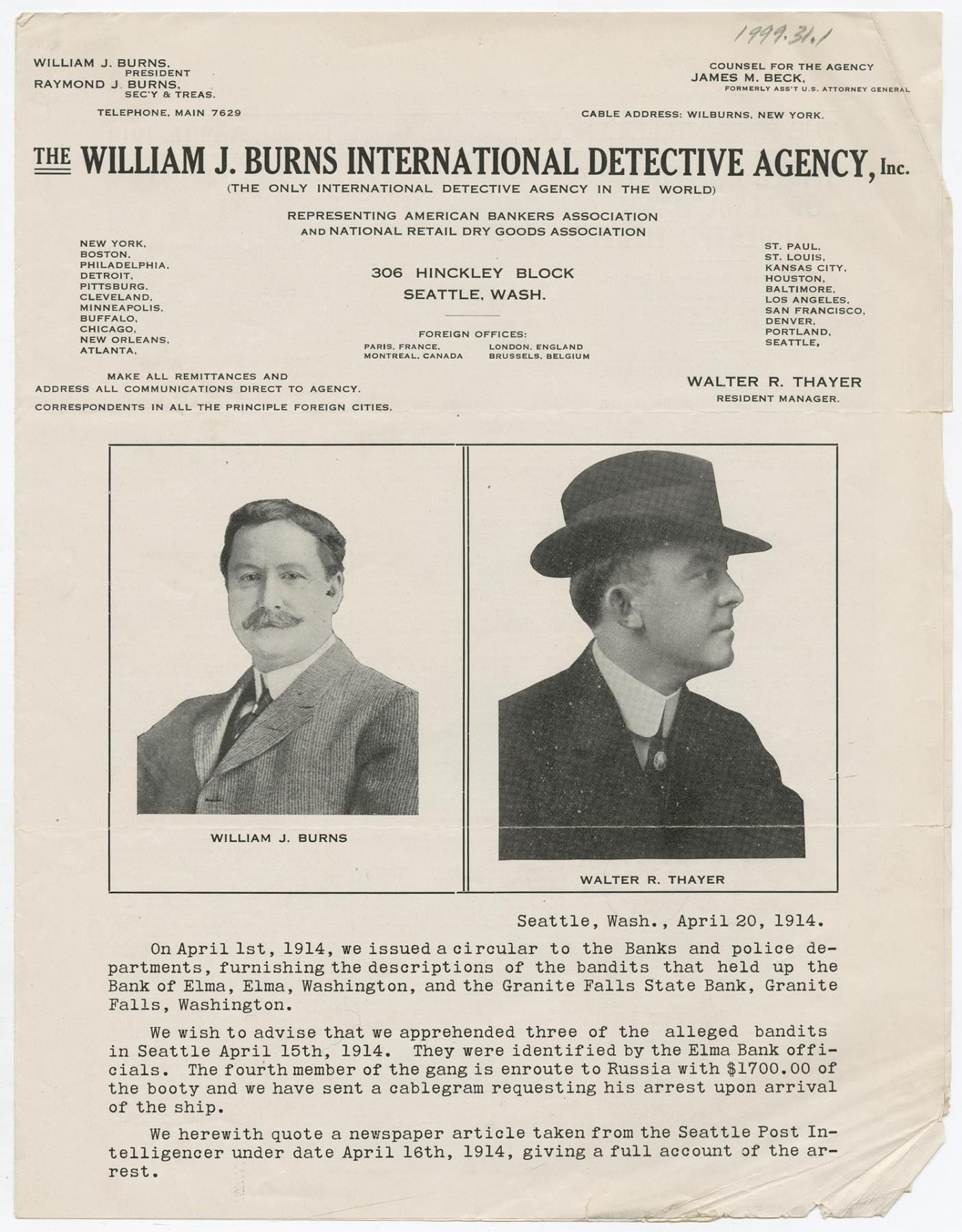
William J. Burns played that role with real skill. He was an infamous egotist that would put Donald Trump to shame. He had the nickname the press had given him — “America’s Sherlock Holmes” — stitched into the lining of his elegant and expensive coats. He had a national reputation he could sell to deep pockets.
What he did not have was evidence.
Investigative journalist Tom Watson saw him for exactly what he was and pinned the label down in January 1915, calling Burns “that calliope detective” and “the fussy charlatan who hunts for evidence with a brass band and a searchlight.”
The vaporware at the center of the big tent
Burns did not bring evidence to Atlanta. He brought ballyhoo. By the time he arrived on the morning of April 20, 1914, his unseen “report” on the Frank case had been floating through the American press for roughly three months, morphing from whisper to tease to forthcoming-any-day-now to nearly-ready to almost-here, never once solidifying into something a judge could read, a prosecutor could cross-examine, or a clerk could file. It was the phantom deliverable. The card dealer’s sleight-of-hand. The rabbit that stayed stubbornly in the hat no matter how many times the ringmaster reached in with a flourish.
Watch the timeline, because it was genuinely a dark comedy, one that played hideous games with the feelings of Mary Phagan’s kinfolk and with the blue-collar Georgians who, like little Mary, were struggling to make ends meet during fifty-five-hour workweeks running from Saturday to Saturday. The multimillionaire Burns and the multimillionaire Lasker were from another world entirely.
On April 6, 1914, the New York Times ran an article entitled “Burns Completes His Frank Report.”
On April 20, 1914, the Atlanta Journal announced Burns had returned from his mysterious rail junket and was “ready to make his report whenever the attorneys for the defense want it.”
On April 22, Judge Ben Hill denied Frank’s “extraordinary motion” anyway.
On April 24, two days after Hill’s ruling, the same New York Times that had declared the report “complete” three weeks earlier ran the piece “Hold Back Report of Burns on Frank.”
Completed on the sixth. Ready on the twentieth. Held back on the twenty-fourth. The report did everything a real document does — except appear in a courtroom, except get tested by cross-examination, except appear at all.
It was Schrodinger’s evidence: alive in the headlines, dead on delivery, and the box never got opened.
Burns was running vaporware a century before Silicon Valley. What he was selling wasn’t a detective’s conclusion. No. He was selling the perpetual anticipation of a detective’s conclusion. Every week of “almost ready” was a week the donor checks kept clearing. The actual product — the signed, evidence-annexed, witness-listed document that could be placed in a judge’s hands and defended under oath — would have been a disaster for the Burns Agency, because once delivered, it could be examined. Once examined, it would stop selling tickets and running up bar tabs. So the strategy was simple. Never finish it. Never even start it. Announce it forever. Hold it back. Promise it tomorrow. Issue fragments. Leak “conclusions.” Tease the reveal. Let the caravan roll on. And get the hell out of town before the bullets start.
The clown car was carrying Chicago money
The men writing the checks were not fools, but either they were being played by Burns — or Burns was giving them exactly what they wanted, an impression of Leo Frank’s innocence. Possibly it was a bit of both. Lasker was in Chicago running Lord and Thomas. Marshall was in New York running the American Jewish Committee. Schiff was on Wall Street. Ochs was at the New York Times. None of them was going to show up at the Fulton County courthouse and ask Burns for a page count. They were going to read the New York papers at breakfast, see the Burns byline, and feel reassured that their money was producing results. And that was the whole point. The circus was not pitched at Georgia. The circus was pitched at a half-dozen breakfast nooks on Fifth Avenue in Manhattan and the Chicago Gold Coast. It was also aimed at people too busy making a living to investigate for themselves, just as the preposterous ADL version of this case is today.
The Chicago money and the New York money kept flowing like a river of gold because Burns kept the smoke machine running, and as long as the smoke kept rolling out under the tent flaps, the customers outside believed there had to be elephants and magicians inside.
The January 30, 1915, Atlanta Constitution eventually put numbers on the flow: “Large Sums Paid to Burns Agency, Haas Tells Court.” The receipts came out only after the circus had left town.
“The Truth Is on the March.” he said. Stirring words. Napoleonic verbs. What was really coming to town was a clown car.
The three-ring racket
Watch the choreography from the grandstand. The headlines are in the papers week after week: Burns is in Europe. Burns cables back. Burns dispatches an operative. The operative arrives. Burns leaves. Burns is returning. Burns has returned. Burns is in conference with the solicitor. Burns is not in conference. Burns goes to New York. Burns sends word from Newark. Burns is back from Nashville. Burns is in Atlanta. Burns is in Marietta. Burns is being chased out of Marietta by a mob. Burns has been rescued. Burns has lost his Atlanta license. Burns has left town. Every one of those movements generated a news cycle. Every news cycle was a fresh poster tacked to a fresh lamppost. Every news cycle was a sensation of gossip and rumor.
Tom Watson’s Jeffersonian covered the tour with the acid pen Watson had been sharpening his whole life. Watson wrote 30,000 pages during his lifetime that survived to the 21st century. Pencil in hand, he called his writing “sawing wood.” Historians describe his writing as having its own life force of venom, wit, and electricity.
His headline-writing skills impress too:
April 23, 1914: “How Much Longer Will the People of Atlanta Endure the Lawless Doings of William J. Burns? What Right Has This Sham Detective to Tamper With the Witnesses That Told the Truth?”
April 30, 1914: “The Frank Case; the Great Detective; and the Frantic Efforts of Big Money to Protect Crime.”
May 7, 1914: “William Jackass Burns, at Another Angle: Some Tarnished Lawyers; Some Bought Newspapers; and the Murder of a Little Georgia Girl.”
Watson was not subtle, but on the Burns question specifically he was not wrong either. He saw a paid performer mistaking himself for a fortune-teller, and he named him for it, week after week.
The rage that cut both ways
The carnival did not just infuriate Frank’s detractors — though it certainly did that, all the way to a Marietta sidewalk in May 1914 where a mob had Burns by the collar before Dan Lehon could drag him out of town.
Even Frank’s own supporters on the ground in Atlanta began to get impatient with Burns. Every leaked teaser that failed to produce anything substantial was a withdrawal from Frank’s shrinking reserves of public benefit-of-the-doubt. Every day Burns spent working a press gag in New York, Chicago, or Atlanta was a day the clock ran down on Frank’s stay of execution.
The men writing the checks in Chicago and New York could afford an infinite theater run. Frank could not. He was in a cell in The Tower watching a calendar with a deadline on it, listening to a ringmaster in a distant city promise a cavalry that never came.
The poisoned booth
Now came the reward. Burns offered a thousand dollars — and the journalist and Frank sycophant Connolly in 1915 would claim the figure eventually climbed to five thousand — for any person anywhere in the country who could produce evidence of a single immoral act across the entirety of Leo Frank’s thirty years of life. On its face, it looks like a challenge thrown to the prosecution. Look closer and it is something much more clever than that.
Any witness who walks up to the booth, raises a hand, and offers real information damaging to Frank’s character is now, by definition, a bounty-chaser. The second they claim the money, defense counsel stands up at the next hearing and says, with total accuracy, “Your Honor, this witness has a direct financial interest in the testimony he is about to give. He is a paid claimant. His credibility should be weighed accordingly.”
The reward stamps every witness it attracts with a mark in ink that reads “impeachable” the moment he opens his mouth, anywhere. And the more astute kind of witness would see that, and therefore never come forward.
So you can see how the reward does “reverse work” too — and this is where the con really shines. The longer no claimant comes forward, the louder Burns can proclaim that no compromising material on Frank’s character exists anywhere on Earth. Look at the silence, he says. I offered a thousand dollars and nobody took it.
The silence is not exculpatory. Silence in the face of a tainted bounty proves only that nobody wanted to climb into the poison ivy.
It may mean no relevant evidence exists. It may equally mean that anyone with relevant evidence saw the bear trap and stayed out of it. It may mean that the witnesses with the most relevant material — the young women who had already testified in 1913 about Frank’s conduct around teenage girls at the National Pencil Company — had already paid the reputational price of testifying once, under oath, and were not about to volunteer to be called Burns’ bounty-chasers on top of it.
The informational content of the silence is zero. The rhetorical content, however, is enormous.
Meanwhile, Burns’ show rolls on. The “full truth” is always in the future, tomorrow, next week, next month, next never.
That is the deepest trick the Burns operation taught the Frank campaign, and it is the trick that is still being run today, more than a century later. The Truth is always marching. The Truth is never arriving. The Leo Frank vindication is always around the next bend. The exoneration is forthcoming. The absolution is coming. The exculpation is near. The new evidence will be revealed next year, next decade, next generation, in a book not yet written, in a documentary not yet funded, in a pardon petition not yet filed.
In 1914 the deliverable was Burns’s “report.” In 1986 it was a “humanitarian” pardon that explicitly declined to address guilt or innocence, and left the conviction intact. In every intervening year some new Frank partisan has stood in front of a microphone and told the county, the state, the country, and the whole world, with all the credibility of a man who has never read the Brief of Evidence, that Leo Frank “deserves to be exonerated.”
Not a single one of them has ever produced court-admissible evidence that would survive cross-examination by Hugh Dorsey, or Hugh Dorsey’s dog for that matter.
That is the inheritance Burns bequeathed. A memorable slogan lifted from someone else’s work. A “report” that wasn’t even a report, just an unclaimed reward and some offhand opinions. A “report” that is never cited by Frank partisans because it wasn’t even a report at all.
The Chicago money paid the freight. The New York money paid the lighting. The Georgia public paid the cover charge in social trauma, lynching, and endless denigration in the alien-owned “national press.” And when the tent came down and the caravan moved on, what remained in the middle of the empty lot was exactly what had been at the center of it from the start. Nothing. A handbill on the ground reading “The Truth Is on the March,” and under those words, very small, the words “Admission $1,000 and your soul.”
_____________
Citations
Wikipedia contributors. (2026). “Albert Lasker”; Wikipedia, The Free Encyclopedia. Retrieved April 20, 2026, from https://en.wikipedia.org/wiki/Albert_Lasker
Leo Frank Case Research Library. (2024). New York Times chronology of Frank-case coverage, February through May 1914. https://leofrank.info/newspapers/new-york-times
Wikipedia. (2026). “Leo Frank”; retrieved April 20, 2026, from
https://en.wikipedia.org/wiki/Leo_Frank
Wikipedia. (2026). “Louis Marshall”; retrieved April 20, 2026, from
https://en.wikipedia.org/wiki/Louis_Marshall
Wikipedia. (2026). “William John Burns”; retrieved April 20, 2026, from https://en.wikipedia.org/wiki/William_John_Burns
Watson, T. E. (1915, January). “The official record in the Leo Frank case.” Watson’s Magazine, calling Burns “that calliope detective” and “the fussy charlatan who hunts for evidence with a brass band and a searchlight.”
Atlanta Journal. (1914, April 20). “Burns now ready to present Frank evidence.” Page 16, column 5. Reproduced at
http://MaryPhagan.com
Atlanta Constitution. (1915, January 30). “Large sums paid to Burns agency, Haas tells court.” Reproduced at Leo Frank Case Archive. https://leofrank.org/newspapers/atlanta-constitution
Atlanta Constitution. (1914, May 2). “William J. Burns driven out of Marietta.” Reproduced at Leo Frank Case Archive.
https://leofrank.org/newspapers/atlanta-constitution
Atlanta Constitution. (1914, June 20). “Burns is dropped by police chiefs.” Reproduced at Leo Frank Case Archive.
https://leofrank.org/newspapers/atlanta-constitution
Watson, T. E. (1914, April 23). “How much longer will the people of Atlanta endure the lawless doings of William J. Burns?” The Jeffersonian, Vol. 11, Issue 16. Reproduced at Leo Frank Case Research Library. https://leofrank.info/enright/the-jeffersonian.html
Watson, T. E. (1914, April 30). “The Frank case; the great detective; and the frantic efforts of big money to protect crime.” The Jeffersonian. Reproduced at Leo Frank Case Archive.
https://leofrank.org/newspapers/jeffersonian-weekly
Watson, T. E. (1914, May 7). “William Jackass Burns, at another angle: Some tarnished lawyers; some bought newspapers; and the murder of a little Georgia girl.” The Jeffersonian. Reproduced at Leo Frank Case Archive. https://leofrank.org/newspapers/jeffersonian-weekly
Connolly, C. P. (1915). The Truth About the Leo Frank Case. Vail-Ballou Company. Reproduced at Leo Frank Case Archive.
https://leofrank.org/reactions/the-truth-about-the-leo-frank-case
_____________
Source: Author