Audio Book – The Leo Frank Case: The Lynching of a Guilty Man, part 13

The Burns Detective Agency was hired by the Leo Frank legal team to “find new evidence” and invalidate witnesses’ testimony after Frank was convicted. The agency’s and Frank’s other allies’ scandalous behavior — planting fake evidence; bribing perjurers; paying witnesses to leave town; and even attempting to murder a prosecution witness! — was a significant factor in convincing Georgians that Frank was indeed guilty.

by Philip St. Raymond
for The American Mercury

THE CRIMINAL ACTS of the Leo Frank forces as they attempted to get a new trial for their client — or invalidate the results of the original trial — are so numerous, so outrageous, so obvious, and so egregious that — once you hear about them in this new audio book — you will be outraged at how academia and the media have kept these facts from you. Did you know an attempt was made to pay an inmate to poison one of the state’s main witnesses, James Conley? In fact, it’s fair to say that chicanery on this scale comes very close to proving that Frank was guilty — and that his legal/propaganda/dirty tricks team knew he was guilty; for these are not the acts of innocent men with clear consciences.


In this, the thirteenth audio segment of this ground-breaking work originally published by the Nation of Islam, part of their series called The Secret Relationship Between Blacks and Jews, we also learn of the judicial condemnation of Frank’s team — another thing that today’s media accounts and academic studies of the Frank case leave out.

This new audio book, based on the Nation of Islam’s The Leo Frank Case: The Lynching of a Guilty Man, the best investigative effort made on the Leo Frank case in the last 100 years, will take you on a trip into the past — to the greatest American murder mystery of all time; a mystery that will reveal to you the hidden forces that shape our world even today.

To read all the chapters we’ve published so far, simply click on this link.

We at The American Mercury are now proud to present part 13 of our audio version of this very important book, read by Vanessa Neubauer.

Simply press “play” on the player embedded above — or at the end of this article — to hear part 13 of the book.

* * *

Click here to obtain a print or e-book copy of this important work, The Secret Relationship Between Blacks and Jews, Vol. 3; The Leo Frank Case: The Lynching of a Guilty Man.

For further information on the Nation of Islam Historical Research Group, readers are encouraged to visit their Web site, noirg.org.


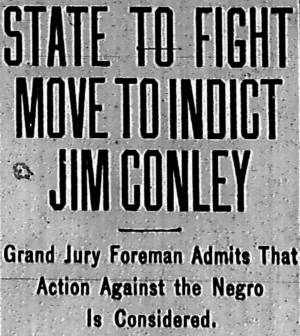
State to Fight Move to Indict Jim Conley

Another in our series of new transcriptions of contemporary articles on the Leo Frank case.

The Atlanta Georgian

Wednesday, July 16, 1913

Grand Jury Foreman Admits That Action Against the Negro Is Considered.

The reported proposal by some of the members of the Grand Jury to meet for an investigation of Jim Conley’s connection with the murder of Mary Phagan has precipitated a sharp struggle in which Solicitor Dorsey has declared himself bitterly opposed to any action looking toward the indictment of the negro as a principal in the crime or even as an accessory after the fact, as the negro admits himself to be.

The fight has resolved itself into a contest to determine whether Conley shall go on the stand in the trial of Leo Frank as a reputable, trustworthy and free citizen, the status in which the Solicitor wishes to maintain him, or as a prisoner with the shadow of an indictment hanging over him.

In the latter aspect, several of the members of the Grand Jury are said to contend that he should appear, inasmuch as he is a confessed accessory and a possible principal.

The defense is said not to be opposed to the review of the case by the Grand Jury at this time nor to the indictment of Conley. Luther Z. Rosser, chief counsel for Frank, has charged from the first that Conley was the man guilty of the slaying of Mary Phagan, and it is presumed that he would be willing to enjoy the tactical advantage that the indictment of Conley probably would give the defense.

W.D. Beattie, foreman of the Grand Jury, intimated Thursday morning that the matter of calling the body together to consider a Conley indictment was under consideration by some of the members, but he said that no formal request had as yet been made for him to convene them. He said that he would issue the call when he had received a sufficient number of requests.

It is understood that the requests will be submitted to the foreman Thursday, on the ground that the evidence connecting Jim Conley directly with the crime is infinitely stronger than the evidence on which Leo Frank was indicted about two months ago, and that for this reason Conley should not be permitted to go before a jury as a free and unsuspected man and testify against Frank.

* * *

The Atlanta Georgian, July 16th 1913, “State to Fight Move to Indict Jim Conley,” Leo Frank case newspaper article series (Original PDF)

Dorsey Adds Startling Evidence

Another in our series of new transcriptions of contemporary articles on the Leo Frank case.

The Atlanta Georgian

Wednesday, July 16, 1913

*Editor’s Note: This article also ran in the Final (Box Score) Edition under the headline “State Finds New Frank Evidence.”

Solicitor Declares Prosecution’s Plans Are Unchanged—Doesn’t Expect Conley Indictment.

That affidavits as sensational and direct against Leo M. Frank, accused of murdering Mary Phagan, as the Mincey statement was against the negro, Jim Conley, are in the hands of the State and will be substantiated by witnesses at the trial, July 28, was admitted by Solicitor General Hugh M. Dorsey Wednesday morning.

The Solicitor and Frank A. Hooper, associated with him in the prosecution, made it plain that in their opinion the Mincey affidavit had in no way hurt the State’s case against Frank, and that they could anticipate no development that would make Conley instead of Frank the principal in Atlanta’s greatest murder mystery.

They say they do not expect the Grand Jury to indict the negro before the trial of Frank, and do not hesitate to say that any move in that direction will meet with opposition from the Solicitor, who would necessarily have to introduce witnesses to secure the indictment.

State’s Case Complete.

Continue Reading →

Audio Book – The Leo Frank Case: The Lynching of a Guilty Man, part 12

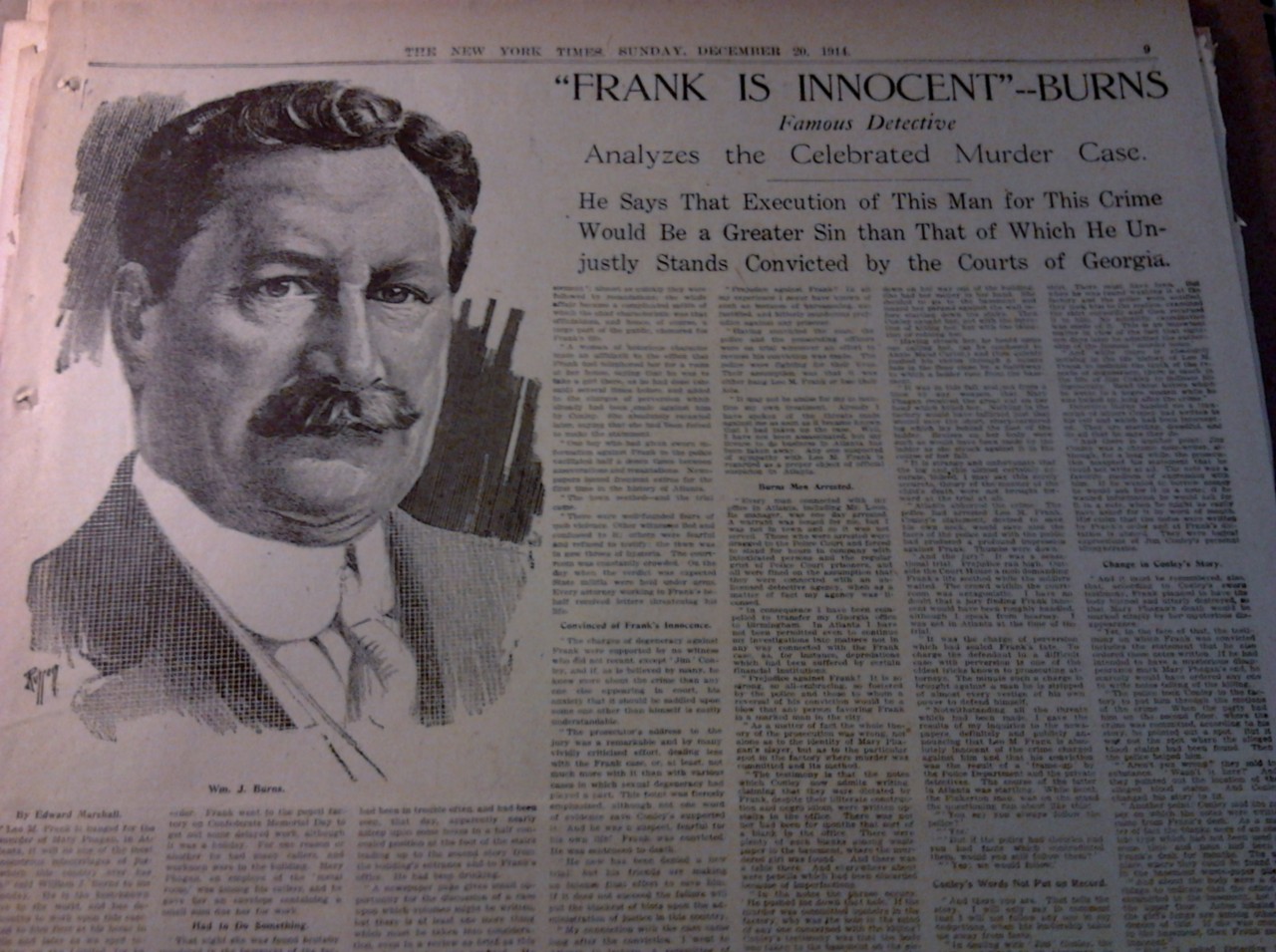
The New York Times published reams of blatant pro-Frank propaganda, such as this piece lionizing crooked detective William J. Burns.

by Philip St. Raymond
for The American Mercury

TO HEAR the attacks made on the character of James Conley — a major witness against Leo Frank when Frank was tried for murdering a 13-year-old girl in his employ, Mary Phagan — you could easily be forgiven for assuming that you were hearing a speech from a Grand Wizard of the Ku Klux Klan instead of the words of B’nai B’rith-associated Frank and his defenders, so harsh were the racial attacks and epithets used against the Black man. Such was the race-baiting nature of the immense nationwide publicity campaign waged by Jewish advertising executive Albert Lasker and his willing “fake news” allies in the media, such as the New York Times‘ Jewish publisher Adolph Ochs.


In this, the twelfth audio segment of this ground-breaking work originally published by the Nation of Islam, part of their series called The Secret Relationship Between Blacks and Jews, we also learn how that campaign ultimately failed — even according to Lasker, its chief — and ended up increasing dislike and resentment of powerful Jews for their outrageous interference in Georgia’s proper legal process of punishing a sex killer. We also learn that Lasker himself — one of America’s top advertising men, famous for his campaign that convinced millions of American women to start smoking cigarettes — had a strong dislike for Frank and suspected him of being a sex pervert, just as prosecution witnesses had said, but carried out his pro-Frank propaganda duties for the Jewish community nevertheless.

This new audio book, based on the Nation of Islam’s The Leo Frank Case: The Lynching of a Guilty Man, the best investigative effort made on the Leo Frank case in the last 100 years, will take you on a trip into the past — to the greatest American murder mystery of all time; a mystery that will reveal to you the hidden forces that shape our world even today.

To read all the chapters we’ve published so far, simply click on this link.

We at The American Mercury are now proud to present part 12 of our audio version of this very important book, read by Vanessa Neubauer.

Simply press “play” on the player embedded above — or at the end of this article — to hear part 12 of the book.

* * *

Click here to obtain a print or e-book copy of this important work, The Secret Relationship Between Blacks and Jews, Vol. 3; The Leo Frank Case: The Lynching of a Guilty Man.

For further information on the Nation of Islam Historical Research Group, readers are encouraged to visit their Web site, noirg.org.


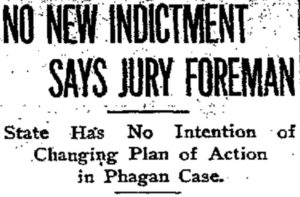
No New Indictment Says Jury Foreman

Another in our series of new transcriptions of contemporary articles on the Leo Frank case.

The Atlanta Constitution

Wednesday, July 16, 1913

State Has No Intention of Changing Plan of Action in Phagan Case.

The declaration of W.D. Beattie, foreman of the grand jury, that the grand jury had no intention of taking steps to indict James Conley, and a statement from Solicitor General Hugh M. Dorsey that as far as he was concerned the state would continue its present plan of action in regard to the Mary Phagan murder, apparently put a block to the rumor that the grand jury would go over the solicitor’s head and indict the negro sweeper for murder.

The same rumor was put into circulation in regard to the former grand jury which served during the May term, but nothing ever came of the reporta [sic].

Solicitor Dorsey stated positively that he had no intention of shifting the present plan and would continue to prosecute on the indictment returned against Leo M. Frank by the previous grand jury. Newport Lanford, chief of detectives, also declared that as far as the detective department was concerned that there would be no shift.

It apparently means that the state will continue an even course in the matter with the intention of threshing out the matter of the guilt of Superintendent Frank before taking up the question of the guilt of the negro.

It was rumored Wednesday that the solicitor had given Conley another grilling with a view to extracting further statements from him in regard to the case. He declined to discuss this feature of the case and also refused to state anything further in regard to the Mincey affidavit.

Should the solicitor in the week and a half left before the Frank trial obtain a confession from Conley or secure evidence from another source that would brand him as the guilty party that would, of course, change the entire affair.

* * *

The Atlanta Constitution, July 16th 1913, “No New Indictment Says Jury Foreman,” Leo Frank case newspaper article series (Original PDF)

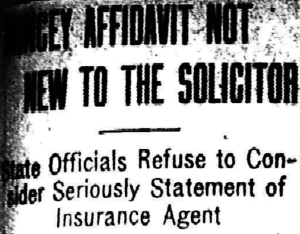
Mincey Affidavit Not New to the Solicitor

Another in our series of new transcriptions of contemporary articles on the Leo Frank case.

The Atlanta Journal

Tuesday, July 15, 1913

State Officials Refuse to Consider Seriously Statement of Insurance Agent

Despite the claim that many witnesses to corroborate the assertions of W.H. Mincey, the insurance agent and school teacher who claims that Conley confessed to him can be produced by the defense of Leo M. Frank, state officials refuse to consider seriously Mincey’s testimony as an important element in the case.

Details of the Mincey affidavit are corroborated by E.F. Holloway, an employe of the National Pencil factory, who states that he remembers Mincey’s visit to the scene of Mary Phagan’s murder on the Tuesday following the crime.

Mincey states that he was told that 20 negroes were on duty at the factory on the day of the murder, although about eight of them were employed by the concern. He further detailed a conversation with a factory employe, who allowed him to look about the place that day.

Holloway says that he remembers the visit of a man who asked particularly about the negroes employed at the factory, and otherwise fully corroborates the details of the visit to the factory as given by Mincey.

Solicitor Dorsey, it was learned Tuesday, has known for some weeks that the Frank defense possessed the Mincey affidavit and as a result he has made a vigorous probe of the affiant’s past career, and of his movements on the day that Mary Phagan was murdered, the day that the negro Conley is supposed to have told him that he had killed a girl.

Solicitor Dorsey will not discuss his investigation of the man, but it is known that he does not consider the man’s probable testimony as important.

The solicitor spent Tuesday morning examining a number of the state’s witnesses, and he is spending practically his entire time in preparing the Frank case. He expects to be ready when the case is called on July 28, a week from next Monday.

* * *

The Atlanta Journal, July 15th 1913, “Mincey Affidavit Not New to the Solicitor,” Leo Frank case newspaper article series (Original PDF)

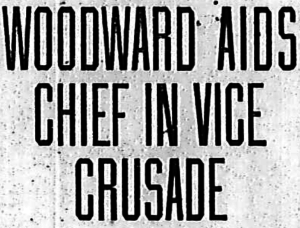
Woodward Aids Chief in Vice Crusade

Another in our series of new transcriptions of contemporary articles on the Leo Frank case.

The Atlanta Georgian

Tuesday, July 15, 1913

Mayor Woodward entered the fight which Chief Beavers is waging against vice in Atlanta Tuesday when he told of a negro dive and blind tiger which he said had been reported to him Tuesday morning by a man whose name he refuses to make public.

This man, Mayor Woodward declared, had told him he had seen policemen passing through an alley in the direction of the blind tiger, though none of them had actually been seen to enter the place.

Chief Beavers ordered an investigation.

Captain Poole has been given particular instructions to probe the report that policemen visit the place.

Declaring that 50 per cent of the women arrested during the months of June and July were young girls, Mrs. Mary Bohnefeld, police matron, Tuesday afternoon placed the blame for present conditions on the immodest dress now worn by women, and also on the paint and powder demanded by the dictates of fashion.

“The dress that women are wearing nowadays,” she declared, “is a crime, and is the cause of the downfall of so many young girls. Men are encouraged to make advances when they see a girl on the streets, wearing immodest and indecent clothing and with her face painted and powdered.”

Orders closing two boarding houses were issued from headquarters this morning. Mrs. Lulu Bell, whose hotel at Fair and Peters streets was raided last week, resulting in the arrest of half a dozen persons and the telling of a white slave story by Effie Drummond, was ordered to vacate the place and close it up.

The negro joint at 76 Chestnut street, which was raided by the police Sunday morning, was also ordered closed by Chief Beavers Tuesday. Several white men were arrested when this raid was made and evidence has been obtained that the place was one of the most vicious in the city.

* * *

The Atlanta Georgian, July 15th 1913, “Woodward Aids Chief in Vice Crusade,” Leo Frank case newspaper article series (Original PDF)

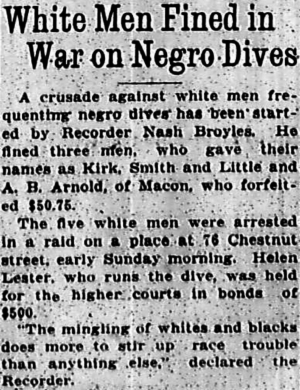
White Men Fined in War on Negro Dives

Another in our series of new transcriptions of contemporary articles on the Leo Frank case.

The Atlanta Georgian

Tuesday, July 15, 1913

A crusade against white men frequenting negro dives has been started by Recorder Nash Broyles. He fined three men, who gave their names as Kirk, Smith and Little and A.B. Arnold, of Macon, who forfeited $50.75.

The five white men were arrested in a raid on a place at 76 Chestnut street, early Sunday morning. Helen Lester, who runs the dive, was held for the higher courts in bonds of $500.

“The mingling of whites and blacks does more to stir up race trouble than anything else,” declared the Recorder.

* * *

The Atlanta Georgian, July 15th 1913, “White Men Fined in War on Negro Dives,” Leo Frank case newspaper article series (Original PDF)

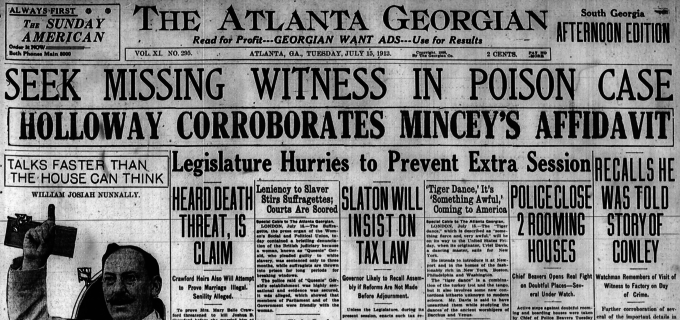
Holloway Corroborates Mincey’s Affidavit

Another in our series of new transcriptions of contemporary articles on the Leo Frank case.

The Atlanta Georgian

Tuesday, July 15, 1913

RECALLS HE WAS TOLD STORY OF CONLEY

Watchman Remembers of Visit of Witness to Factory on Day of Crime.

Further corroboration of several of the important details in the remarkable affidavit of W.H. Mincey, insurance agent and teacher, who swore he heard Jim Conley confess killing a girl, came Tuesday in a statement by E.F. Holloway, day watchman at the National Pencil Factory.

Holloway substantiated in every particular the story of Mincey’s visit to the factory the Tuesday following the crime and recalled the general trend of the conversation, which was practically as Mincey related it in his signed statement published exclusively in The Georgian Monday. The defense has obtained an affidavit from Holloway as to the circumstances of the day.

“I remember Mincey coming here Tuesday,” said Holloway. “He was a quiet, retiring fellow, and I guess we scared him out. There were a lot of people in the factory, and the excitement after the murder was at its height. Several detectives were there and there were a score of people bothering the detectives and the factory authorities with their theories on the killing.

Wanted Negroes Arrested.

Continue Reading →

Police Close 2 Rooming Houses

Another in our series of new transcriptions of contemporary articles on the Leo Frank case.

The Atlanta Georgian

Tuesday, July 15, 1913

Chief Beavers Opens Real Fight on Doubtful Places—Several Under Watch.

Active steps against doubtful rooming and boarding houses were taken by Chief of Police Beavers Tuesday morning. He declared that he intends to close every “shady” rooming house in the city against which he can obtain evidence.

He intimated that he has the addresses of a number of boarding houses where, it is alleged, young girls and men visit and where the roomers are in reality inmates of the place, and his campaign is to be directed especially against these.

They will be thoroughly investigated, and if evidence is found to sustain the action, will be closed and the Council asked to revoke the licenses of the persons who operate the places.

Orders closing two boarding houses were issued from headquarters this morning. Mrs. Lulu Bell, whose hotel at Fair and Peters streets was raided last week, resulting in the arrest of half a dozen persons and the telling of a white slave story by Effie Drummond, was ordered to vacate the place and close it up.

The Bell place, Chief Beavers firmly believes, is one of those under the control of the “higher-ups” in the vice ring, against whom he is now obtaining evidence, and he regards the arrest of the Bell woman and the closing of the place as one of the significant steps of the campaign he is waging against vice.

The negro joint at 76 Chestnut street, which was raided by the police Sunday morning, was also ordered closed by Chief Beavers Tuesday. Sev-eral [sic] white men were arrested when this raid was made, and evidence has been obtained that the place was one of the most vicious in the city.

* * *

The Atlanta Georgian, July 15th 1913, “Police Close 2 Rooming Houses,” Leo Frank case newspaper article series (Original PDF)

Audio Book – The Leo Frank Case: The Lynching of a Guilty Man, part 11

Jewish attorney Louis Marshall

by Philip St. Raymond
for The American Mercury

ALMOST THE ENTIRE pro-Leo Frank narrative is dependent on one claim: that Prosecutor Hugh Dorsey fabricated James Conley’s story (or edited and embellished a story made up by Conley) and then coached him to deliver it skillfully on the witness stand. If Conley’s story was not fiction, and not the result of conspiracy, collusion, and coaching; then it must be true — and Leo Frank must be guilty. Thus everything depends on the “coaching” allegation. In this week’s audio book section, we’ll see how untenable is the “coaching” claim. Why would Dorsey and Conley let stand a fiction that included so many checkable facts? — such as people he and Frank had met on the street on the way to the pencil factory — such as the one-hour time discrepancy between Conley’s version of the visit of Emma Clark and Corinthia Hall, and the time the girls themselves gave — and many other items which were totally unnecessary to establishing Frank’s guilt.

In this, the eleventh audio segment of this ground-breaking work originally published by the Nation of Islam, part of their series called The Secret Relationship Between Blacks and Jews, we also learn about the massive public relations campaign by leaders of the Jewish community — men such as Albert Lasker, Louis Marshall, and Adolf Ochs — designed to build a sense of outrage in the minds of Americans that an innocent man had been ruthlessly framed by “anti-Semites.”


This new audio book, based on the Nation of Islam’s The Leo Frank Case: The Lynching of a Guilty Man, the best investigative effort made on the Leo Frank case in the last 100 years, will take you on a trip into the past — to the greatest American murder mystery of all time; a mystery that will reveal to you the hidden forces that shape our world even today.

To read all the chapters we’ve published so far, simply click on this link.

We at The American Mercury are now proud to present part 11 of our audio version of this very important book, read by Vanessa Neubauer.

Simply press “play” on the player embedded above — or at the end of this article — to hear part 11 of the book.

* * *

Click here to obtain a print or e-book copy of this important work, The Secret Relationship Between Blacks and Jews, Vol. 3; The Leo Frank Case: The Lynching of a Guilty Man.

For further information on the Nation of Islam Historical Research Group, readers are encouraged to visit their Web site, noirg.org.


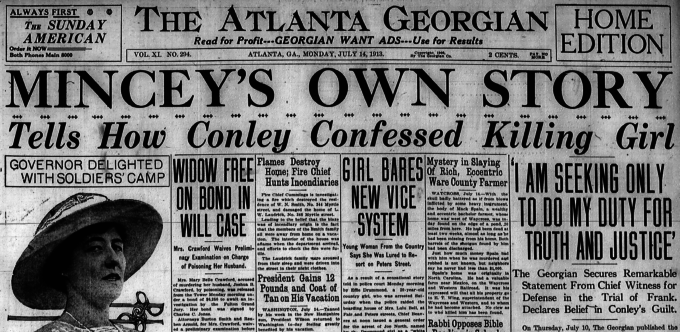
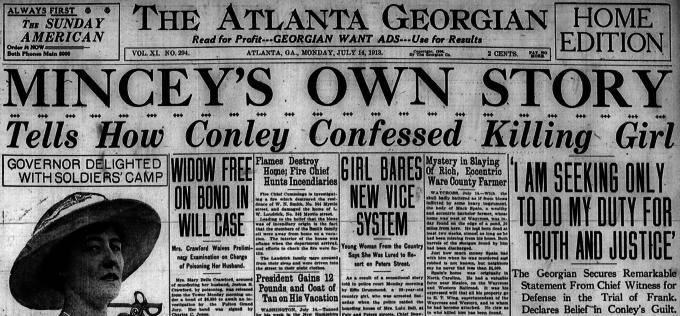
Mincey’s Own Story

Another in our series of new transcriptions of contemporary articles on the Leo Frank case.

The Atlanta Georgian

Monday, July 14, 1913

*Editor’s Note: This article also appeared in the Night Edition under the headline “Mincey Tells of Confession.”

Tells How Conley Confessed Killing Girl

‘I AM SEEKING ONLY TO DO MY DUTY FOR TRUTH AND JUSTICE’

The Georgian Secures Remarkable Statement From Chief Witness for Defense in the Trial of Frank. Declares Belief in Conley’s Guilt.

On Thursday, July 10, The Georgian published the exclusive story of an affidavit in the possession of the lawyers for Leo M. Frank, accused of the murder of Mary Phagan, made by W.H. Mincey, an insurance agent, the substance of which was to the effect that Jim Conley, the negro sweeper at the pencil factory, had confessed that he killed the little girl.

In his affidavit, Mincey declared that he met the negro Conley at Electric avenue and Carter street on the afternoon of the murder; that Conley was intoxicated and when approached by Mincey for insurance became angry and exclaimed, threateningly: “I have killed a girl to-day; I don’t want to kill nobody else.”

The Georgian has now secured from Mincey a complete statement of his connection with the Phagan case. It is as follows:

By W.H. MINCEY

Continue Reading →

Audio Book – The Leo Frank Case: The Lynching of a Guilty Man, part 10

by Philip St. Raymond
for The American Mercury

THE “Hang the Jew” hoax — the claim that “anti-Semitic mobs” stood outside the courtroom during the 1913 Atlanta murder trial of Leo Frank, shouting “hang the Jew or we’ll hang you” or the like and thereby intimidating the jury — was demolished during our audio book segment last week, and shown to be an invention totally unsupported by the facts. This week we hear in detail how that hoax has been cut and pasted, repeated, amplified, mangled, and embellished by lazy, sloppy, and partisan academics, writers, and journalists over the years. One source even claimed that the “anti-Semitic mobs” that surrounded the courtroom were “inflamed” by the anti-Jewish rhetoric of populist writer Tom Watson — though it is common knowledge that Watson never wrote about the case until well after the trial. It’s an amazing litany of incompetence and deception by both Jewish and non-Jewish leaders in the American media, educational, and cultural establishment.

In this, the tenth audio segment of this ground-breaking work originally published by the Nation of Islam, part of their series called The Secret Relationship Between Blacks and Jews, we also see the evidence that — far from being a “persecuted minority” — Jews in the South were very much accepted as a welcomed and even elite part of the white community, and that Jews in turn accepted and supported the supremacist racial hierarchy system there. Their attitude toward black people, the real persecuted minority, was completely the opposite of how the Jewish organizations like to portray it today: Jews fully supported a system in which black men and women constantly lived in fear of losing their lives for the slightest real or imagined infraction. We’ll learn that Leo Frank himself once even stated that black people had “no value.”


This new audio book, based on the Nation of Islam’s The Leo Frank Case: The Lynching of a Guilty Man, the best investigative effort made on the Leo Frank case in the last 100 years, will take you on a trip into the past — to the greatest American murder mystery of all time; a mystery that will reveal to you the hidden forces that shape our world even today.

To read all the chapters we’ve published so far, simply click on this link.

We at The American Mercury are now proud to present part 10 of our audio version of this very important book, read by Vanessa Neubauer.

Simply press “play” on the player embedded above — or at the end of this article — to hear part 10 of the book.

* * *

Click here to obtain a print or e-book copy of this important work, The Secret Relationship Between Blacks and Jews, Vol. 3; The Leo Frank Case: The Lynching of a Guilty Man.

For further information on the Nation of Islam Historical Research Group, readers are encouraged to visit their Web site, noirg.org.


Audio Book – The Leo Frank Case: The Lynching of a Guilty Man, part 9

This view and diagram of the courthouse and the crowd outside, published in the August 3, 1913 issue of the Atlanta Journal, gives the lie to the claims of pro-Frank writers. The crowd is described as patiently waiting for spectators to depart so they, too, could get a seat in the courtroom, and they are lined up at the court’s entrance, nowhere near the windows. The caption reads: “Photo diagram of court room in old city hall building, where Leo M. Frank, superintendent of the National Pencil factory, is on trial for his life charged with the murder of Mary Phagan. Although the available seats are taken soon after court convenes, the crowd waits without all day for some weary spectator to give up a seat. On the second floor the many witnesses await their turn for a gruelling examination by attorneys on either side.”

by Philip St. Raymond
for The American Mercury

JEWISH WRITERS on the Leo Frank case have made some astounding claims about the “atmosphere of anti-Semitism” during the trial of B’nai B’rith official Leo Frank for the strangulation sex murder of his 13-year-old employee, Mary Phagan, in 1913 Atlanta. There were, we are told, “anti-Semitic” mobs (yes, plural) on the streets, some right outside the open courtroom windows, openly threatening the judge and the jury, screaming “crack the Jew’s neck!” and “hang the Jew or we’ll hang you!” and the like.

It is even claimed that Jew-haters with rifles stood almost on the window sills during the trial, aiming at the trial participants just a few feet away. This doesn’t comport well with the contemporary accounts of the trial from Atlanta’s three daily newspapers of the time, the Constitution,  the Journal, and the Georgian — none of which reported any such outrages, despite the fact that they took a generally pro-Frank tone throughout the trial — despite the fact that all three employed Jewish editors — and despite the fact that Leo Frank and his defense team praised the newspaper coverage they received. All contemporary accounts show that the trial proceeded with dignity, fairness, proper procedure, and decent composure throughout. The judge wouldn’t even tolerate applause when court was in session.

(ILLUSTRATION: click here for a large version, showing detail; This view and diagram of the courthouse and the crowd outside, published in the August 3, 1913 issue of the Atlanta Journal, gives the lie to the claims of pro-Frank writers. The crowd is described as patiently waiting for spectators to depart so they, too, could get a seat in the courtroom, and they are lined up at the court’s entrance, nowhere near the windows. The caption reads: “Photo diagram of court room in old city hall building, where Leo M. Frank, superintendent of the National Pencil factory, is on trial for his life charged with the murder of Mary Phagan. Although the available seats are taken soon after court convenes, the crowd waits without all day for some weary spectator to give up a seat. On the second floor the many witnesses await their turn for a gruelling examination by attorneys on either side.”)

In this, the ninth audio segment of this ground-breaking work originally published by the Nation of Islam, part of their series called The Secret Relationship Between Blacks and Jews, we also learn that large Jewish advertisers — even the major shareholders in Leo Frank’s place of business, the National Pencil Company, in whose factory the murder took place — were also satisfied with the trial coverage given by the Atlanta dailies, and maintained their significant spending on ad space before, during, and after the trial.


The two versions of the trial — the calm and serious one reported by every reporter who was there, and the one featuring near-rabid anti-Jewish mobs making violent threats — are very different. They are mutually contradictory. They can’t both be true. Perhaps it is telling that, in very recent years, some Jewish writers (not including the ADL) have quietly dropped the lurid tales of “anti-Semitic” mobs from their version of events.

This new audio book, based on the Nation of Islam’s The Leo Frank Case: The Lynching of a Guilty Man, the best investigative effort made on the Leo Frank case in the last 100 years, will take you on a trip into the past — to the greatest American murder mystery of all time; a mystery that will reveal to you the hidden forces that shape our world even today.

To read all the chapters we’ve published so far, simply click on this link.

We at The American Mercury are now proud to present part 9 of our audio version of this very important book, read by Vanessa Neubauer.

Simply press “play” on the player embedded above — or at the end of this article — to hear part 9 of the book.

* * *

Click here to obtain a print or e-book copy of this important work, The Secret Relationship Between Blacks and Jews, Vol. 3; The Leo Frank Case: The Lynching of a Guilty Man.

For further information on the Nation of Islam Historical Research Group, readers are encouraged to visit their Web site, noirg.org.


Audio Book – The Leo Frank Case: The Lynching of a Guilty Man, part 8

by Philip St. Raymond
for The American Mercury

THE PROSECUTION in the Leo Frank case never mentioned the word “Jew” until it was brought up by the defense — and lead prosecutor Hugh Dorsey had a long history of friendly relations and close collaboration with Jews throughout his life and career. So the accusation, common today among pro-Frank partisans, that the indictment and prosecution of Leo Max Frank was motivated by “anti-Semitism” simply doesn’t stand up to even the slightest scrutiny.

In this, the eighth audio segment of this ground-breaking work originally published by the Nation of Islam — part of their series called The Secret Relationship Between Blacks and Jews — we also learn that Frank himself denied that anti-Jewish feelings played any part in his arrest and trial.


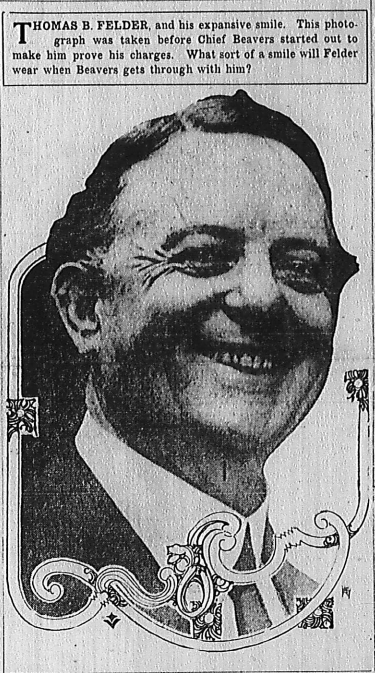
Thomas B. Felder, and his expansive smile.

In this section of the book, we also learn of the amazing, blustering, and mysterious entry into the case of prominent Atlanta lawyer — shyster, really — “Colonel” Thomas B. Felder. Felder tried to present himself as a merely a public-spirited attorney, working for the Phagan family to “get to the bottom” of the mystery of Mary Phagan’s death. But when he was caught trying to bribe police officials to illegally obtain original documents related to the case — and when the Phagan family denied any connection with him — he beat a hasty retreat while loudly proclaiming his belief in Leo Frank’s guilt and claiming that “Jew money” was causing the authorities to “shield Frank.” Despite his strident attacks on Frank after he was discredited, the evidence is very strong that Felder was actually in Frank’s employ.

This new audio book, based on the Nation of Islam’s The Leo Frank Case: The Lynching of a Guilty Man, the best investigative effort made on the Leo Frank case in the last 100 years, will take you on a trip into the past — to the greatest American murder mystery of all time; a mystery that will reveal to you the hidden forces that shape our world even today.

To read all the chapters we’ve published so far, simply click on this link.

We at The American Mercury are now proud to present part 8 of our audio version of this very important book, read by Vanessa Neubauer.

Simply press “play” on the player embedded above — or at the end of this article — to hear part 8 of the book.

* * *

Click here to obtain a print or e-book copy of this important work, The Secret Relationship Between Blacks and Jews, Vol. 3; The Leo Frank Case: The Lynching of a Guilty Man.

For further information on the Nation of Islam Historical Research Group, readers are encouraged to visit their Web site, noirg.org.


Girl Bares New Vice System

Another in our series of new transcriptions of contemporary articles on the Leo Frank case.

The Atlanta Georgian

Monday, July 14, 1913

Young Woman From the Country Says She Was Lured to Resort on Peters Street.

Raid Frees Victim of Alleged Gang From a Resort on Peters Street.

Five White Men and Dozen Negroes Arrested in Raid Are Convicted in Court.

*Editor’s Note: This article was also published under the headlines “Police Hunt Vice Band’s Leader” and “17 Caught in Vice Drag Fined,” the latter article containing the following six paragraphs in brackets. The sub-headlines for each article are listed above in the same order. There is also a continuation of the article on a second page, which does not show on the scanned source text.

[The police crusade against vice resulted Monday afternoon in the conviction and fining of five white men and twelve negroes who were caught in a raid on a negro dive at 76 Chestnut avenue early Sunday morning.

Judge Broyles sharply scored the existence of such alleged dives, and declared every effort must be put forth to close them. Chief Beavers has ordered the house closed immediately.

The trial created a stir in police court, as eight of the negroes were chauffeurs for some of the most prominent men in Atlanta, who were on hand to make bond for them.

The white men, who were fined $15.75 each, are C.F. Smith, clerk, of 54 Angler avenue; S.B. Moore, clerk, of 131 South Pryor street; A.B. Arnold, of Macon; J.W. Little, of Macon, and C.D. Kirk, of 348 North Jackson street.

Eight of the negro men were fined $10.75 each.

Eilene Lester, who, it is alleged, runs the place; Henry Lester, her husband, and Theresa Gilbert and Minnie Jones, two other negro women implicated, were bound over to the Superior Court under $500 bond each.]

General Order Issued.

Continue Reading →

Vice Pickets Posted at Hotels

Another in our series of new transcriptions of contemporary articles on the Leo Frank case.

The Atlanta Georgian

Monday, July 14, 1913

Revocation of License Will Be Asked if Law Is Violated. Girl Sentenced.

The vice inquiry Monday morning resulted in a close surveillance of hotels which, it is alleged, harbor young girls for immoral purposes. If the law is violated, the police authorities say, the police committee of Council will be requested to revoke the license of the hotel involved.

Chief Beavers has detailed men to watch for violations of the law following information given by Corinne Wilson and Dora Rosthstein [sic], sentenced to the Reform School Saturday afternoon.

The new information, it is understood, involves one more well-known downtown hotel and several other parties, one of whom is said to be prominent. Developments are expected to-day as a result of work along this line.

In the meantime five cases, made out against four women and one man following a raid Saturday on the home of Mrs. Lula Bell on Peters Street have been set on the Recorder’s docket for trial Monday morning.

One of Saturday’s victims, Corinne Wilson, has called upon her husband, who resides in Marietta, to come to her.

“I love him,” said the girl, “and I believe he loves me. If he only will come to me and keep me out of the Reform School, I will be straight.”

Dora Rothstein probably will be sent to the Reform School the latter part of the week.

* * *

The Atlanta Georgian, July 14th 1913, “Vice Pickets Posted at Hotels,” Leo Frank case newspaper article series (Original PDF)

Audio Book – The Leo Frank Case: The Lynching of a Guilty Man, part 7

Leo Frank’s lead attorney, Luther Z. Rosser, who, along with Reuben Arnold and other members of the Frank defense team, played the 1913 version of the “race card” with vigor, attacking James Conley in particular and, in his words, “niggers” in general.

by Philip St. Raymond
for The American Mercury

WE HEAR A LOT today about people “playing the race card” — using race unjustly in a dispute, or as a moral bludgeon to obscure the facts. In 1913 Atlanta, the Leo Frank defense team played the race card — and in a very big way. Interestingly, the pro-Frank forces used race in a way that most people would find grossly unacceptable today: crudely attacking prosecution witness James Conley, a black man, in open court and on the record as a “dirty,” “lying,” “thieving” “nigger” — and characterizing the sex killing of Mary Phagan as a “Negro crime” of which “white man” Leo Frank, president of the Atlanta B’nai B’rith, would be — they insinuated — “incapable.”

In this, the seventh audio segment of this ground-breaking work originally published by the Nation of Islam — part of their series called The Secret Relationship Between Blacks and Jews — we also learn that the Frank defense promoted the idea that there was a separate category of testimony — “Negro testimony” — which wise jurors ought to ignore or regard as false. Nevertheless, the race-baiting strategy failed and the all-white jury believed the black man.


We also hear about Leo Frank’s own statement to the court. We can’t really call it testimony, because under Georgia law at the time, the defendant had the right to make an unsworn statement and deny the prosecution the right to cross-examine him on it — which is exactly what Leo Frank did. Frank spoke for hours on end, and almost all of that time was spent telling the jury about the intricacies of managing the accounts of the pencil factory where he was superintendent — presumably to give the impression that he would have been so busy with his books on that fatal day that he simply wouldn’t have had time to commit the murder and move the body to the basement. It was ultimately unconvincing.

This new audio book, based on the Nation of Islam’s The Leo Frank Case: The Lynching of a Guilty Man, the best investigative effort made on the Leo Frank case in the last 100 years, will take you on a trip into the past — to the greatest American murder mystery of all time; a mystery that will reveal to you the hidden forces that shape our world even today.

To read all the chapters we’ve published so far, simply click on this link.

We at The American Mercury are now proud to present part 7 of our audio version of this very important book, read by Vanessa Neubauer.

Simply press “play” on the player embedded above — or at the end of this article — to hear part 7 of the book.

* * *

Click here to obtain a print or e-book copy of this important work, The Secret Relationship Between Blacks and Jews, Vol. 3; The Leo Frank Case: The Lynching of a Guilty Man.

For further information on the Nation of Islam Historical Research Group, readers are encouraged to visit their Web site, noirg.org.


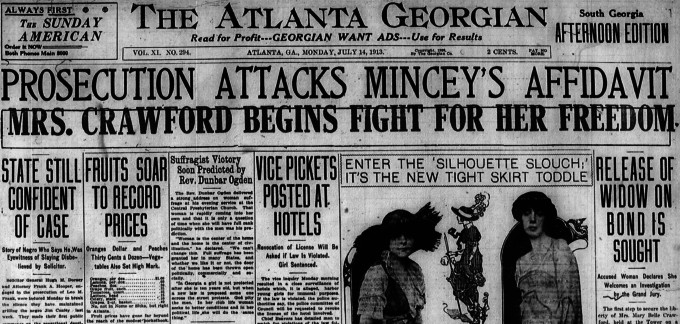
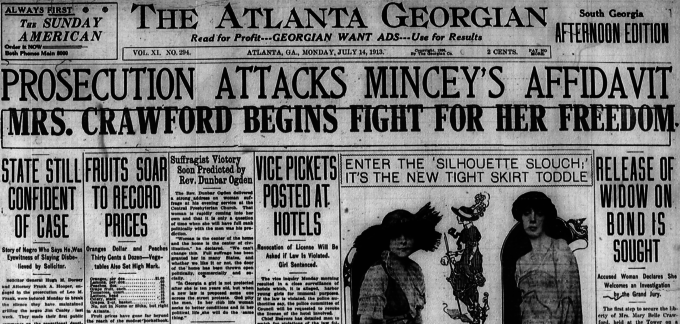
Prosecution Attacks Mincey’s Affidavit

Another in our series of new transcriptions of contemporary articles on the Leo Frank case.

The Atlanta Georgian

Monday, July 14, 1913

MRS. CRAWFORD BEGINS FIGHT FOR HER FREEDOM

STATE STILL CONFIDENT OF CASE

Story of Negro Who Says He Was Eyewitness of Slaying Disbelieved by Solicitor.

Solicitor General Hugh M. Dorsey and Attorney Frank A. Hooper, engaged in the prosecution of Leo M. Frank, were induced Monday to break the silence they have maintained grilling the negro Jim Conley last week. They made their first public comments on the sensational developments of the last few days in the Phagan murder mystery.

Both declared emphatically that neither the affidavit of W. H. Mincey, insurance solicitor, nor the reported confession of the negro Will Green, who is said to have been an eyewitness of the attack upon Mary Phagan, gave evidence sufficient to shake their conviction of Leo Frank’s guilt.

Rumors that the State was preparing to change its theory and to ask for the indictment of Jim Conley were laughed at.

Mincey Affidavit Discounted.

Continue Reading →

Indictment of Conley Puzzle for Grand Jury

Another in our series of new transcriptions of contemporary articles on the Leo Frank case.

The Atlanta Georgian

Sunday, July 13, 1913

*Editor’s Note: Some text is blurred in the original document, and illegible text is marked by “[…]”. The text box insert is transcribed at the bottom of this post.

Old Police Reporter Declares True Bill Against Negro Might Alter Entire Frank Prosecution.

RULES OF EVIDENCE CITED

Mincey Affidavit May Have Important Bearing on Defense of Pencil Factory Manager.

By An Old Police Reporter.

Persistent rumors have been abroad of late that the present Grand Jury may indict James Conley for the murder of Mary Phagan.

This is interesting, for if the Grand Jury should indict Conley it would set up a situation immediately possible of most decided results.

Frank already has been indicted, for reasons presumably sufficient to the Grand Jury then acting upon his case.

Would the present Grand Jury be justified in proceeding to the indictment of Conley, notwithstanding the former Frank indictment?

Unquestionably it would, if the circumstances of the case warranted it—indeed, there are many who will think it should proceed to that, if in that way justice seemed more likely to be established.

In getting a point of view in this matter, I have found it necessary to go back to the beginning, and to ask myself this:

Would the Grand Jury, in possession of all the present facts and circumstances pointing toward either Conley or Frank as the guilty man, have indicted Frank or Conley, as a primary proposition?

Much Room for Speculation.

Continue Reading →