Another in our series of new transcriptions of contemporary articles on the Leo Frank case.

Atlanta Journal
August 7th, 1913
Defense Asks Mistrial When Crowd in the Court Applauds Announcement of the Decision
Judge Roan, However, Refuses to Stop Trial—Dr. Harris on Stand During Afternoon and Again Asserts that Mary Phagan Suffered Violence Just Before Death—Dalton Called to Corroborate Conley But Court Adjourns Before He Testifies
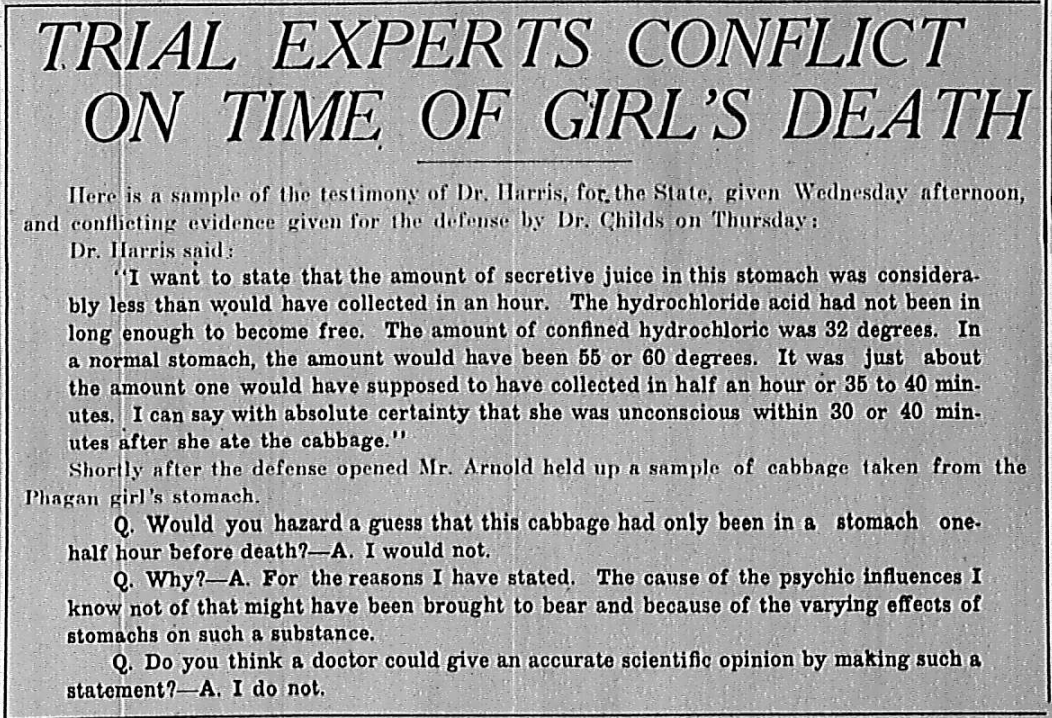
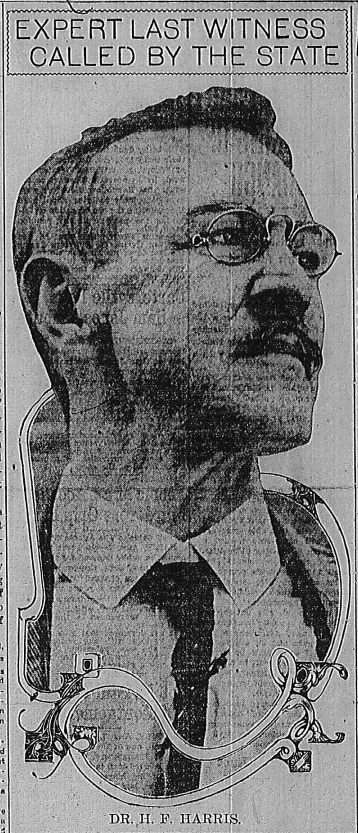
Dr. H. F. Harris, secretary of the state board of health, was the first witness called for the Wednesday afternoon session after the jury was called into the room. The direct examination under Solicitor Dorsey was resumed.
Dr. Harris again asserted very positively that Mary Phagan had suffered violence of some kind immediately preceding her death, and explained in detail his reasons for reaching this conclusion.
The secretary of the state board of health was excused from the witness stand at 5 o’clock before his cross-examination had been finished. He was very weak, he said in response to the court’s inquiry, and was permitted to stop his testimony, which was resumed Thursday. Mrs. J. W. Coleman, mother of Mary Phagan, was the last witness examined before adjournment.
C. B. Dalton, mentioned by Conley, as having visited the factory in company with two women, was called just before court adjourned but did not testify.
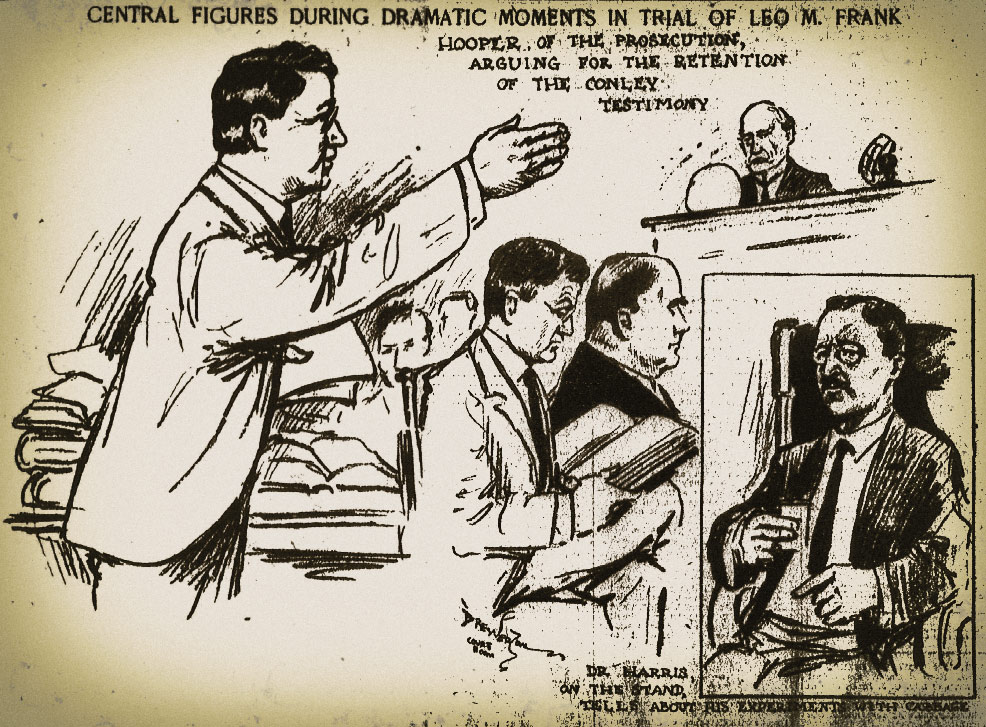
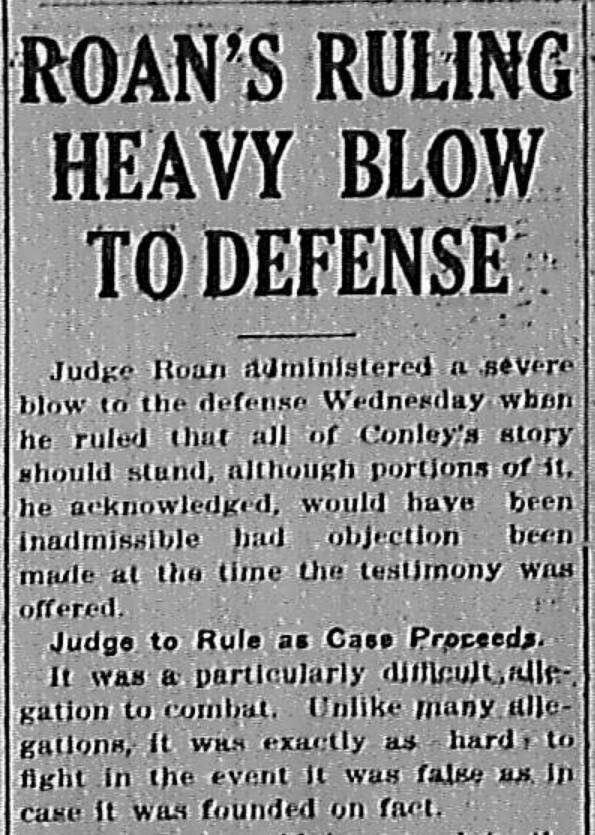
Great excitement prevailed in the court room Wednesday afternoon when Judge L. S. Roan announced his decision to reverse himself on his ruling of Tuesday, striking out parts of Conley’s testimony. From the spectators gallery the crowd cheered the decision, but quieted down after Attorney Arnold, for the defense, made a motion to clear the room. Judge Roan refused to clear the court of spectators but warned the spectators not to repeat the demonstration. Attorney Arnold then moved for a mistrial, in this he was also overruled by the judge.
Judge Roan, in his ruling, held that all of Conley’s testimony would remain in the record of the case and that Solicitor Dorsey would be allowed to introduce witnesses to corroborate the negro’s charges against Frank’s conduct in his presence. As to allowing the Epps boy to testify as to what Mary Phagan told him regarding her fears of Frank, the judge held that inadmissible and the newsie will not be recalled.
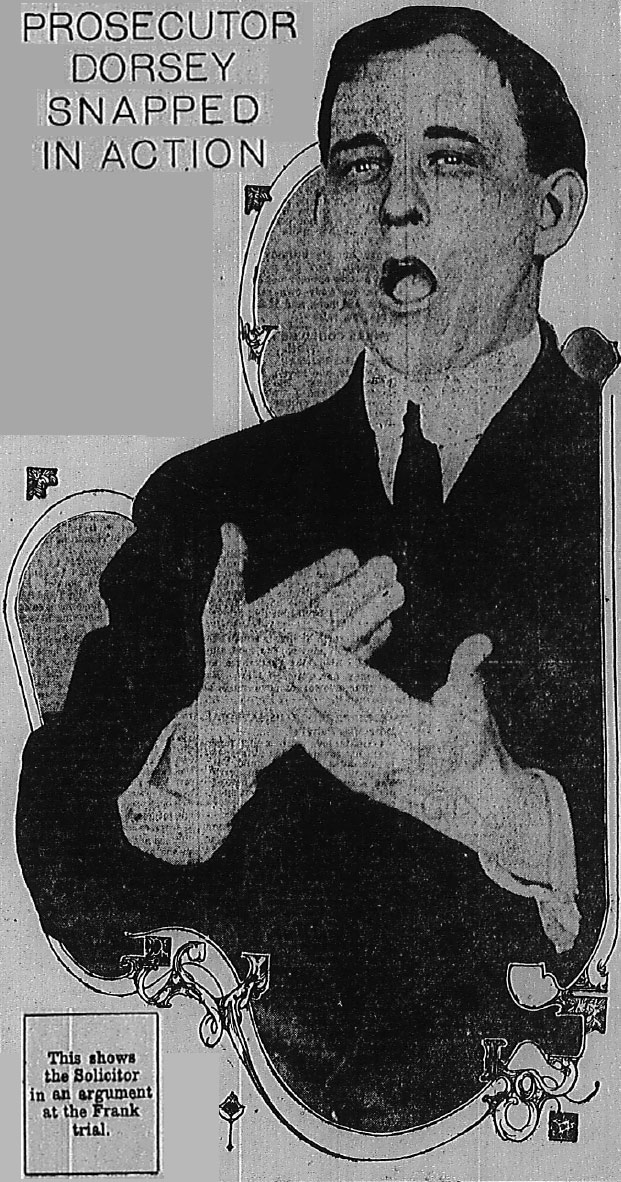
When court reconvened at 2 o’clock, Solicitor Dorsey resumed his argument. The solicitor renewed his contention, citing authorities to back it up, that as a general rule failure to make objection to incompetent evidence at the time of introduction is a waiver of that right.
In this instance, said he, the court should hold that the defense had waived the right to object. In case of doubt as to the relevancy of evidence, said he, it should be left to the jury for that body to determined its weight.
The solicitor said that he cited several Georgia cases, among them some very old decisions. The solicitor stated that no fixed rule can be observed regarding the introduction of evidence of acts similar to the crime charged. The law says simply, says he, there must be some logical connection which proves or tends to prove the other. It must be one of a system of mutually dependent crimes, said he.
“I intend to show,” said he, “that this crime was one of a system of mutually dependent crimes.”
The solicitor contended that he had the right to introduce evidence of transactions which serve to illustrate the state of mind of the defendant or his intention or purpose.
“The fact,” he said, “that they are simply crimes, does not make them inadmissible.”
DORSEY QUOTES AUTHORITIES.
The solicitor asked if he should proceed with argument on his second proposition—involving his right to enter testimony corroborative of Conley’s. Judge Roan told him to proceed with that argument.
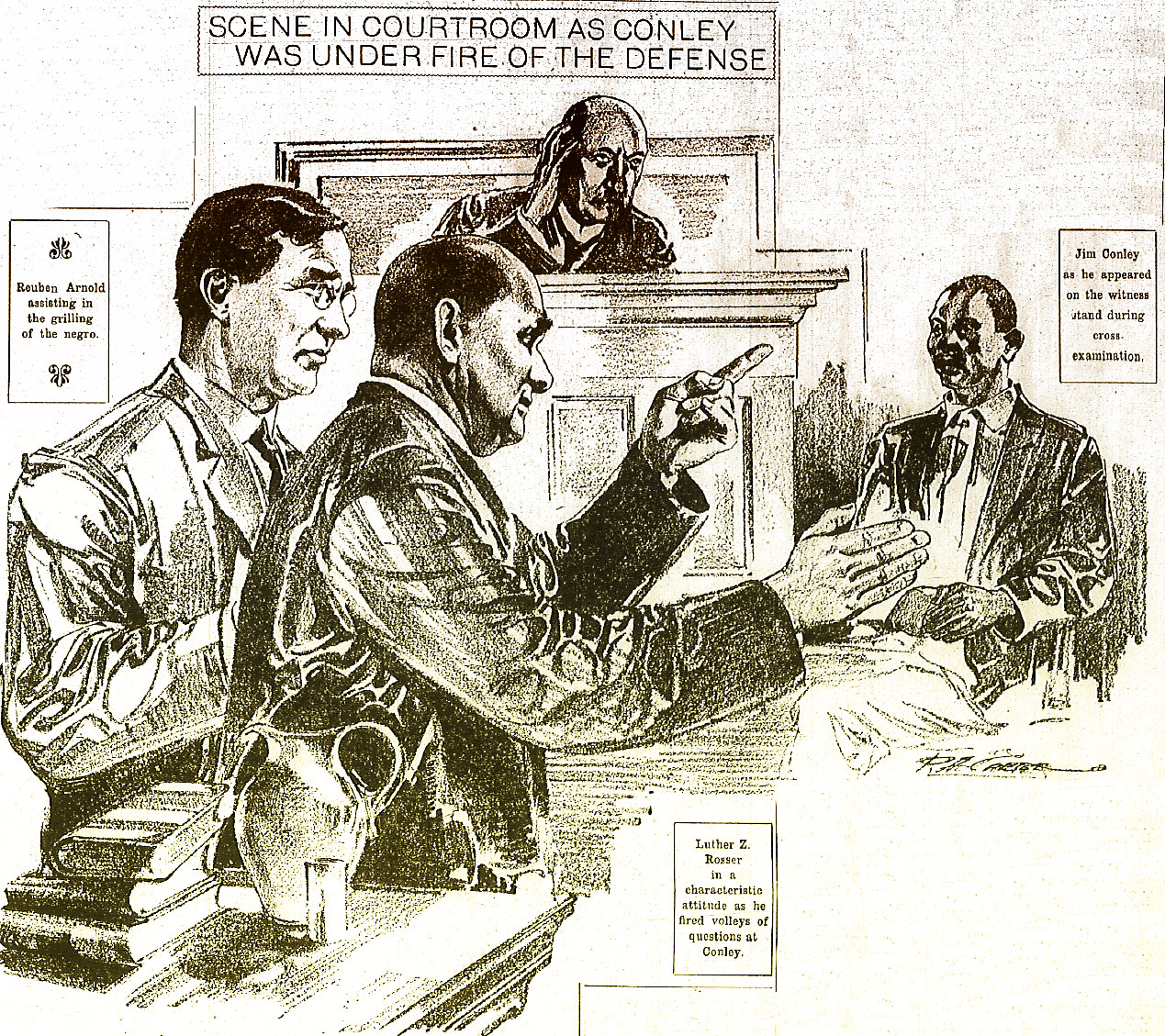
While the solicitor argued Attorney Rosser sat in the witness’ chair, lolling back, with his legs crossed, rubbing his head.
Continue Reading →