Atticus Haygood Henslee and Marcellus Johenning:
The Post-Verdict Affidavit Campaign, the Investigation of the Jurors, the Credibility of Their Accusers, Judge Leonard Strickland Roan’s Decision, and the Georgia Supreme Court’s Rejection of the Bias Claims
Revised Thursday, October 15, 2026
By Brian Nelson
Monday, August 25, 1913: The Defense Goes After the Jury
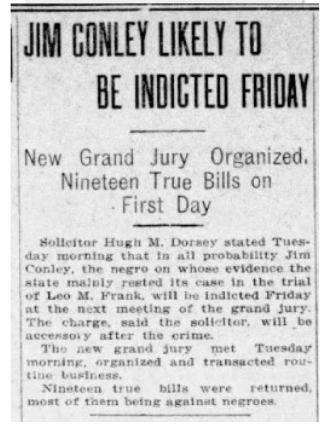
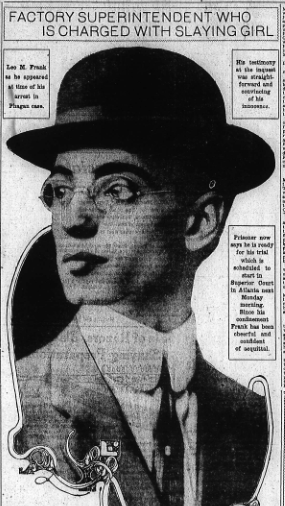
On Monday, August 25, 1913, twelve men found Leo M. Frank guilty of murdering thirteen-year-old Mary Phagan at the National Pencil Company in Atlanta. Judge Leonard Strickland Roan sentenced Frank to death on Tuesday, August 26. Frank’s lawyers immediately began the legal fight to overturn the conviction, and within weeks they were building another case, this time against two of the men who had helped convict him. They were Atticus Haygood Henslee, a thirty-six-year-old traveling salesman, and Marcellus Johenning, a forty-six-year-old industrial employee.
Frank’s attorneys accused both men of entering the trial with their minds already made up. They claimed Henslee had discussed Frank’s guilt in several Georgia communities, sometimes using violent and anti-Jewish language. Three members of one Atlanta family accused Johenning of expressing a firm belief in Frank’s guilt months prior to hearing the trial evidence. Both jurors denied entering the jury box prejudiced and insisted their verdict rested upon the evidence they heard in court.
The defense investigation grew into a substantial legal and newspaper controversy involving merchants, traveling salesmen, railroad trips, hotel registers, business orders, newspaper photographs, reluctant witnesses, court summonses, character evidence, impeachment evidence, fellow jurors, and sworn statements from people across Georgia. Some evidence helped Frank’s attorneys. Other records created serious problems for their accusations.
Judge Roan understood how important the charges could become. During the new-trial hearing on Thursday, October 23, 1913, he indicated that proof of the juror accusations could make further examination of many of the remaining grounds almost unnecessary. On Friday, October 31, after reviewing the competing material, he denied Frank another trial.
The Georgia Supreme Court reviewed the attacks upon both jurors and upheld Roan on Tuesday, February 17, 1914. Regarding Henslee, the Court concluded:
“On the conflicting evidence there was no abuse of discretion in this case.”
The Court separately upheld Roan’s determination concerning Johenning, finding no abuse of discretion in holding him free of disqualifying prejudice (Frank v. State, 1).
Those rulings provide the legal foundation for this study. The accusations were real, some were serious, and they deserved examination. The courts considered them and refused to overturn the verdict on those grounds. Understanding why requires more than counting affidavits. We have to examine how the witnesses were found, what each one actually claimed, whether several affidavits described the same conversation, how reliable the dates were, what documentary evidence confirmed or contradicted the stories, whether witnesses were reluctant, and what happened when the State challenged their credibility.
What Frank’s Lawyers Had to Prove
Atlanta had been discussing Mary Phagan’s murder since Saturday, April 26, 1913. Newspapers filled their pages with the investigation, and people argued over the evidence in offices, hotels, stores, streetcars, railroad cars, factories, and private homes. A prospective juror could hardly have avoided hearing something about the case.
The legal question was not whether Henslee and Johenning had read newspapers. The harder question was whether either man had formed a fixed opinion he could no longer put aside. Someone who said the newspaper reports looked bad for Frank might still be able to hear the evidence and change his mind. A man who had already declared Frank guilty and promised to convict him regardless of the evidence presented a very different problem.
Frank’s attorneys argued Henslee and Johenning belonged in the second category. Both jurors maintained they entered the trial willing to judge the evidence fairly. The dispute therefore involved the actual words attributed to the men, the dates and places of those conversations, the credibility of the people repeating them, and whether the statements showed a fixed prejudgment rather than a temporary opinion.
Georgia law gave Judge Roan the first responsibility for resolving this post-verdict factual dispute. Roan could consider the affidavits, the denials, character evidence, documentary records, and the conduct he had personally observed during the trial. The Georgia Supreme Court then reviewed his ruling for abuse of discretion (Frank v. State, 1).
An affidavit did not automatically prove the accusation written inside it. A juror’s denial did not automatically defeat the accusation either. Roan had to weigh conflicting evidence.
Who Was Atticus Haygood Henslee?
Atticus Haygood Henslee was born Sunday, June 3, 1877. Lamar County records give his death as Thursday, June 14, 1956, and identify Greenwood Cemetery in Barnesville, Georgia, as his burial place. The same records identify his wife as Elizabeth May Franklin Henslee, and a Lamar County marriage index connects Atticus Henslee and May Franklin with a marriage in 1900 (Lamar County Records, 6).
When Frank’s trial opened Monday, July 28, 1913, Henslee was thirty-six years old, married, and head salesman for the Franklin Buggy Company of Barnesville. Contemporary jury descriptions placed his Atlanta residence at 74 Oak Street in West End. The 1912 Atlanta directory confirms the address, while the 1914 directory describes him as a traveling salesman who had moved to Barnesville (The Atlanta Constitution, 4) (The Atlanta Journal, 5) (Atlanta City Directory, 7).
His occupation explains much of the later controversy. Henslee traveled around Georgia selling buggies and related equipment. He visited merchants, rode trains, stayed in hotels, took orders, kept expense records, and dealt with people who knew him commercially and sometimes socially. Like many people in Georgia during the spring and summer of 1913, he sometimes discussed the Phagan case.
His work left both memories and paperwork. Frank’s investigators could follow portions of Henslee’s route and find people who remembered conversations about Frank. Hotel registrations, business orders, expense records, and customer relationships could then be used to check where Henslee actually was.
Those records sometimes helped the defense.
They sometimes helped Henslee.
Friday, July 25, 1913: Henslee Says He First Learned He Would Serve
Henslee later swore he first learned he had been summoned for jury service at approximately five in the afternoon on Friday, July 25, 1913, when the notice reached him at 74 Oak Street. He said this was his first knowledge he would serve and reported when Frank’s trial opened Monday, July 28 (Henslee Affidavit, 24).
This date later became important because the Sparta witnesses remembered Henslee speaking as though he already knew about his jury service almost a month earlier.
Sunday, August 10, 1913: Henslee the Ventriloquist
One unusual detail in the newspaper record is Henslee’s reputation as a ventriloquist. On Sunday, August 10, The Atlanta Journal described him entertaining the sequestered jurors by throwing his voice around their quarters. Bailiff Charles F. Huber reportedly believed he heard a woman nearby and tried to find her, only to discover Henslee had produced the voice as a practical joke (The Atlanta Journal, 11).
The episode has nothing to do with prejudice, but it gives us a small glimpse of the men living together during the long trial and explains why later reports occasionally called Henslee the ventriloquist on the Frank jury.
Henslee’s Later Life
Henslee remained connected with the buggy business after the trial. On Sunday, June 4, 1916, The Atlanta Georgian reported his candidacy for the Georgia Prison Commission. During that campaign, The Jeffersonian, associated with Thomas E. Watson, used Henslee’s service on the Frank jury in political publicity (The Atlanta Georgian, 60) (The Jeffersonian, 61).
His later political activity shows how the Frank case remained part of his public identity. It cannot establish what he believed prior to Frank’s trial and should remain separate from the evidence concerning his original qualification as a juror.
Who Was Marcellus Johenning?
Marcellus Johenning was approximately forty-six years old during Frank’s trial. Contemporary jury descriptions identified him as married, employed in shipping or industrial work, and living at 161 Jones Avenue in Atlanta (The Atlanta Constitution, 4) (The Atlanta Journal, 5).
The 1912 Atlanta directory lists “Johenning Marcellus (Annie)” as a foreman at 271 Marietta Street, with his residence at 161 Jones Avenue. Later directories continue to connect him with the same address and Hodges Broom Works. A 1916 listing uses Alfred M. Johenning, while the 1919 directory uses A. Marcellus Johenning and describes him as a timekeeper (Atlanta City Directory, 7).
The repeated address, employer, and household association strongly suggest his fuller name may have been Alfred Marcellus Johenning. A birth, marriage, census, or death record would provide firmer proof, so Marcellus Johenning remains the safest published form. His reported age places his probable birth year around 1866 or 1867.
The Hodges Broom Works Connection
Johenning’s work became relevant because one of his later accusers, H. C. Loevenhart, claimed to know him through Hodges Broom Works. City-directory evidence independently confirms Johenning’s connection with the company, making the acquaintance plausible.
This supports one part of H. C. Loevenhart’s account without proving the alleged conversation. A directory can establish employment and residence. It cannot tell us what one man said to another about Leo Frank several months earlier.
Friday, August 1, 1913: Johenning Asks About the Evidence
Johenning appears in contemporary reporting from the trial. On Friday, August 1, The Atlanta Journal described him asking for further explanation of the National Pencil Company time-clock system during N. V. Darley’s testimony. Darley approached the jury box and explained how the clock recorded employees’ punches and gaps (The Atlanta Journal, 8).
A juror who possessed an earlier opinion could still ask questions, so this does not prove Johenning was impartial. It does show him actively examining trial evidence rather than simply sitting silently through a case he had already decided.
Another newspaper report described Johenning displaying emotion during Frank’s lengthy unsworn statement. Again, the observation proves neither bias nor impartiality. It belongs in the history of how Johenning behaved during the trial (The Atlanta Georgian, 9).
Sunday, August 24, 1913: Tarleton Collier Watches Johenning
One day prior to the verdict, journalist Tarleton Collier published “Frank Jurors an Enthralling Study in Human Emotion” in Hearst’s Sunday American. Collier described Johenning as:
“plainly indecisive and nervous.”
Collier interpreted Johenning’s facial expressions as showing a man reacting to evidence from both sides and appearing uncertain about the result (Collier, 10).
This was a reporter’s impression, not sworn evidence. Collier could not read Johenning’s mind by studying his face. The timing still gives the account some historical value because it appeared during the trial, long before the later juror-bias litigation. A contemporary observer studying Johenning did not portray him as visibly committed to guilt throughout the proceedings.
Monday, August 25, 1913: The Verdict
The jury returned a guilty verdict Monday afternoon, August 25. One detail of the deliberations later became important to the Henslee dispute: how many ballots had been taken and whether one juror initially expressed doubt.
The newspapers disagreed the following morning. The Atlanta Constitution reported one ballot, while The Atlanta Georgian described a first-ballot guilty verdict. The Atlanta Journal reported something different. It said the first vote contained ten votes for conviction, one blank, and one doubtful, followed approximately one hour later by unanimity (The Atlanta Constitution, 12) (The Atlanta Georgian, 13) (The Atlanta Journal, 14).
That disagreement was already in print on Tuesday, August 26. The doubtful-ballot story did not first appear in October after Henslee became a target of the defense.
Henslee Says He Cast the Doubtful Ballot
During the later new-trial proceedings, Henslee and several fellow jurors described an initial ballot containing one doubtful vote, followed by further discussion and a unanimous verdict. Henslee identified himself as the doubtful voter and said he marked his ballot doubtful because he wanted a full discussion of a case that could send Frank to his death (New-Trial Record, 3).
Foreman F. E. Winburn and other jurors supported important parts of the account. F. V. L. Smith also described Henslee as expressing caution concerning how strong the evidence needed to be in a murder case while still withholding his final position during the trial.
The sworn recollections do not perfectly match the Journal’s August 26 report of ten guilty votes, one blank, and one doubtful. The difference should remain visible rather than being explained away. The early newspaper establishes that a doubtful vote was publicly reported immediately after the verdict. The later affidavits identify Henslee as the man responsible.
Why the Doubtful Ballot Helps Henslee
The ballot creates a difficulty for the strongest defense theory. Reuben R. Arnold later portrayed Henslee as a man who deliberately entered the jury with a hidden determination to convict Frank. Yet according to Henslee and several fellow jurors, his doubtful vote delayed unanimity and required additional discussion.
If the other eleven men were ready to convict, Henslee could have voted guilty and helped produce an immediate unanimous verdict. Instead, his claimed vote required more examination of the case.
This does not prove he never made prejudicial remarks. A man can speak strongly in a store, hotel, or streetcar and become much more cautious when another person’s life is in his hands. The doubtful ballot still weakens the simplest picture of Henslee as a juror whose only purpose was securing the fastest possible conviction.
Wednesday, October 29, 1913: Rosser Calls the Ballot a Trick
Luther Z. Rosser tried to turn the doubtful ballot against Henslee. The Atlanta Journal reported Rosser calling it a “miserable, dirty farce” and asking why Henslee voted doubtful “if not to trick the other jurors” (The Atlanta Journal, 54).
The accusation was forceful. Its weakness was the lack of independent evidence describing the supposed scheme. No fellow juror reported Henslee admitting he pretended doubt, and no affidavit established a plan in which he cast a false ballot to manipulate the other men.
Rosser could fairly argue that one doubtful vote did not erase earlier statements attributed to Henslee. The additional claim of a hidden trick required evidence of its own.
The Defense Begins Building the Juror Case
Frank’s lawyers began looking for evidence against the jury after the verdict. Their investigators followed Henslee’s business route, visited communities where he sold buggies, questioned merchants and acquaintances, obtained affidavits, and used legal process when witnesses resisted involvement. Attorney Stiles Hopkins helped gather testimony, while C. W. Burke was publicly identified as an agent working for Rosser.
The investigation was aggressive and organized. Frank had been sentenced to death, so his attorneys had a legitimate reason to examine every possible juror problem.
The historical question concerns what this method does to the evidence. The investigators were not surveying everyone who had spoken with Henslee and recording favorable, unfavorable, and neutral conversations in equal numbers. They were searching for statements capable of disqualifying him.
That does not make the evidence false.
It does mean the affidavits should be examined one by one rather than treated as overwhelming simply because there were many of them.
Why Counting Affidavits Can Mislead
Eleven people accusing Henslee sounds impressive, and the number deserves attention. It cannot settle the issue by itself.
Three Sparta witnesses described one office conversation. Two Monroe witnesses described overlapping portions of another encounter. Gremer and Farkas described the same Albany setting. Other affidavits authenticated hotel records, business transactions, character, or jury conduct without describing another prejudicial conversation.
Multiple witnesses to one event can strengthen corroboration. Three people hearing one conversation are still not three separate conversations occurring on three different dates.
This becomes important whenever the size of the affidavit collection is used as an argument by itself.
How Many People Directly Accused Henslee?
The safest reconstruction identifies eleven principal direct accusers:
R. L. Gremer, Mack Farkas, Julian A. Lehman, Samuel Aron, C. P. Stough, Shi Gray, John M. Holmes, a Johnson identified as T. M. in the formal deposition and S. M. in newspaper reporting, J. J. Nunnally, Dr. W. L. Ricker, and Leon Harrison.
At one stage The Atlanta Georgian referred to “more than a score of affidavits.” Later reporting referred to eleven affiants. The larger number may have included supporting character affidavits, supplemental statements, documents expected but not ultimately used, or other overlapping material.
The surviving newspaper account does not fully explain the difference. The safest description remains eleven direct Henslee accusers, with several describing the same incidents.
Tuesday, September 2, 1913: The Loevenhart Affidavits Against Johenning
H. C. Loevenhart, his wife Jennie G. Loevenhart, and their daughter Miriam Loevenhart were the principal witnesses against Johenning.
The best reading of the inspected exhibit images supports September 2, 1913, for all three affidavits. Some derivative transcriptions have produced a September 26 reading for Jennie’s paper, but the original exhibit image should control unless another separately identified original copy proves otherwise (Loevenhart Affidavits, 16).
C. W. Burke acted as notary on the Loevenhart papers.
H. C. Loevenhart said he knew Johenning through Hodges Broom Works and alleged that during May Johenning discussed Mary Phagan’s murder while expressing a firm belief that Frank was guilty.
Jennie and Miriam described another encounter on Forsyth Street. Miriam supplied the strongest remembered wording and attributed to Johenning:
“I know that he is guilty.”
She described him as speaking positively and almost vehemently (Loevenhart Affidavits, 16).
If accurately remembered, this was meaningful evidence of prejudgment.
The Loevenharts Were Jewish
Johenning’s own affidavit adds an important piece of background. He described the Loevenharts as being “of the same race and religion as Leo M. Frank.” In the terminology used in the 1913 record, Johenning was identifying H. C. Loevenhart, Jennie G. Loevenhart, and Miriam Loevenhart as Jewish, the same religion as Frank (Johenning Affidavit, 25).
Their shared Jewish identity does not prove the family lied, coordinated its testimony, or consciously favored Frank. Religion should never be substituted for actual evidence concerning motive.
It does mean possible shared-community or ethnoreligious sympathy is one human factor a historian can consider, just as possible hostility toward Frank’s Jewish identity must be considered when examining the allegations against Henslee. The possibility should be acknowledged without turning it into a finding the record does not prove.
Three Loevenharts Did Not Mean Three Independent Conversations
H. C. described one conversation. Jennie and Miriam described another encounter together. Miriam referred to similar remarks without establishing a complete separate date and place for each one.
Three affidavits therefore did not establish three fully independent conversations.
Their family relationship does not prove collusion. It does mean the evidence came from a closely connected group whose members may naturally have discussed the case and their recollections with one another. The surviving affidavits do not tell us how independently their memories developed.
That was a fair consideration when Roan weighed the evidence.
Johenning’s Sworn Answer
Johenning denied the separate conversation attributed to him by H. C. Loevenhart. He admitted speaking with Jennie G. Loevenhart and Miriam Loevenhart.
His account of the conversation was substantially different.
According to Johenning, Jennie asked what he thought about the Frank case. He referred to how unfavorable the newspaper reports made Frank’s situation look. When Miriam pressed him for his own opinion, he explained:
“I have only read the papers, and that is all I know about it.”
He said the trial would determine guilt or innocence (Johenning Affidavit, 25).
This was not a blanket denial. Johenning acknowledged the encounter and disputed what his words meant.
The Loevenharts remembered certainty.
Johenning remembered a newspaper-based impression while reserving judgment.
Roan had to decide which account carried more weight.
Was the Loevenhart Family Pressured?
No identified affidavit or contemporary newspaper account establishes that H. C., Jennie, or Miriam Loevenhart complained of being threatened, bribed, or forced to sign a false statement.
Burke’s participation as notary is established.
Improper coercion is not.
This is different from the documented reluctance of several Henslee witnesses. The Johenning affidavits can be criticized for limited independence, family connection, disputed wording, and their connection to a defense investigator. The surviving record does not support saying the family was proved to have been pressured into false testimony.
Thursday, September 4, 1913: Gremer and Farkas Accuse Henslee in Albany
R. L. Gremer and Mack Farkas executed affidavits concerning an Albany conversation. Gremer alleged Henslee spoke confidently about Frank’s guilt, although he could not provide the exact date. He partly identified Henslee afterward through newspaper photographs (Gremer and Farkas Affidavits, 18).
The identification deserves scrutiny. Gremer connected the remembered speaker with a published image after the verdict. This does not prove he identified the wrong person, but it is different from having known Henslee by name when the conversation occurred.
Mack Farkas described the same general setting but was less precise about the wording. He remembered Henslee expressing belief in Frank’s guilt but could not reproduce every exact phrase.
Farkas therefore cannot be used to confirm every emphatic word in Gremer’s account.
Tuesday, July 8, 1913: The Albany Documents Hurt Henslee
The strongest independent evidence against Henslee concerned his own travel chronology.
Henslee broadly said he had not been in Albany between an early-June visit and September 18. Frank’s attorneys found records proving he had been there on Tuesday, July 8.
A Franklin Buggy Company order named Henslee as the salesman. Mack Farkas, Sam Farkas, and B. W. Simon authenticated the transaction. W. W. Little, head clerk at the New Albany Hotel, identified Henslee’s July 8 registration and room 79 (Franklin Buggy Company Order, 26) (Little Affidavit, 27).
This was a real problem for Henslee.
His sworn travel recollection was inaccurate.
Frank’s lawyers were justified in attacking his credibility over it.
What the Albany Records Proved, and What They Did Not
The Albany records established Henslee’s presence and a business transaction.
They did not record a prejudicial statement.
A hotel register tells us where a guest stayed. A buggy order tells us a sale took place. Neither document can tell us what was said during a conversation.
Roan therefore could accept the documentary contradiction and still remain uncertain whether Gremer and Farkas remembered Henslee’s exact words correctly.
The Albany evidence weakened Henslee.
It did not automatically prove every Albany accusation.
What the Buggy Order Actually Recorded
The surviving order lists four buggies and two rubber sets. Earlier descriptions giving three or eight buggies should not replace the original exhibit.
State attorney Frank A. Hooper was reported as referring to eight buggies during argument. The exhibit itself should control the description of what was ordered (Franklin Buggy Company Order, 26) (The Atlanta Journal, 52).
Hooper also argued a salesman seeking substantial business from a Jewish customer would have little reason to insult that customer with inflammatory remarks concerning another Jewish man.
This was an argument from ordinary business behavior.
It was not proof of what Henslee said.
Friday, September 12, 1913: Julian A. Lehman Makes Two Accusations
Julian A. Lehman alleged Henslee made strong statements concerning Frank during two travel encounters. His original affidavit tied one encounter to Monday, June 2, during travel associated with Atlanta and Experiment, Georgia. A second conversation was associated with Friday, June 20 (Lehman Affidavit, 19).
The specificity initially made the accusation easier to test.
The problem arrived when the State reconstructed Henslee’s whereabouts.
Joe Murray and the June 2 Hotel Evidence
Joe Murray, a clerk at the New Albany Hotel, swore Henslee registered for lodging in Albany on June 2 and stayed there that night. Henslee’s expense material also placed him in southwestern Georgia (New-Trial Record, 3).
This created a real problem for Lehman’s original chronology.
The hotel registration did not establish a complete twenty-four-hour alibi. To prove an absolute geographical impossibility we would need the exact time of Lehman’s alleged encounter, train schedules, and realistic travel times.
Even with that limit, the documentary evidence weakened the confidence of Lehman’s original date.
Monday, October 13, 1913: Lehman Becomes Less Certain
Lehman later signed a supplemental affidavit and became less definite about the dates. One alleged conversation was placed around June 20. The other was described more generally as occurring near June 2 rather than firmly on June 2 (Lehman Supplemental Affidavit, 28).
This does not prove dishonesty.
An honest witness can remember an event and forget its exact date.
The change still weakened the original precision. A claim tied firmly to June 2 can be checked against June 2 records. A claim tied generally to early June is harder to test.
Roan was entitled to notice the difference.
Henslee Confronts Lehman
The dispute became personal. Newspaper reporting described Henslee confronting Lehman and threatening criminal action over an accusation making Henslee appear dishonest (The Atlanta Georgian, 36).
Lehman did not withdraw his account.
This shows pressure did not move only from Frank’s investigators toward reluctant witnesses. Henslee also forcefully confronted one of the men accusing him.
Neither action proves whose memory was correct.
Friday, September 26, 1913: The Sparta Witnesses Testify
Shi Gray, John M. Holmes, and a Johnson identified as T. M. in the formal deposition and S. M. in contemporary newspaper reporting described one general discussion at the Walker & Holmes office in Sparta.
They said several men talked about Frank’s guilt. Some participants believed he was guilty and others disagreed. The three witnesses attributed a strong belief in Frank’s guilt to Henslee (Sparta Depositions, 20).
Their accounts offer corroboration of one office conversation.
They should not be presented as three unrelated incidents.
The Sparta Depositions Contained Leading Questions
The original written questions reveal something important about how the defense developed the testimony.
Some questions simply asked what Henslee had said. Others already contained details the lawyers were attempting to prove. One introduced a claim that Henslee had offered to wager money that he would serve on Frank’s jury.
The witnesses did not uniformly adopt every detail inside the question.
Holmes said Henslee had been summoned.
Johnson said Henslee had been drawn and might have to serve.
The answers did not independently prove every element suggested by the attorneys, including the supposed wager (Sparta Depositions, 20).
This does not prove coaching or fabrication.
It does mean a lawyer’s question should never be quoted as though it were the witness’s own testimony.
The Sparta Jury-Summons Problem
Holmes placed the conversation on Friday, June 27.
The witnesses remembered Henslee speaking as though he had already been drawn or summoned to jury service.
Henslee swore his first notice arrived Friday, July 25.
If both accounts are taken literally, the chronology does not fit.
This is more than a minor detail because the jury-service remark made the alleged conversation especially damaging. It connected Henslee’s supposed belief in guilt with the possibility that he might actually sit on Frank’s jury.
Several explanations are possible. The witnesses may have remembered the conversation but misplaced the date. The jury-service detail may have become attached to an earlier discussion. Henslee may have been wrong about when he learned.
The surviving record does not settle the problem.
It establishes a genuine weakness in the defense chronology.
Tuesday, September 2, 1913: Henslee Says Sparta Remembered the Wrong Visit
Henslee offered a specific answer. He admitted returning to Sparta on Tuesday, September 2, after Frank’s conviction. He admitted discussing the case strongly during that later visit.
By September 2 he had heard the entire trial, deliberated, and voted guilty.
A declaration of guilt after the verdict had a completely different legal meaning from the same statement prior to jury service.
Henslee therefore argued the Sparta men remembered real statements but attached them to the wrong visit.
The witnesses rejected his explanation and continued insisting the discussion occurred prior to trial (The Atlanta Constitution, 34) (The Atlanta Georgian, 41).
Roan had to decide which memory was more persuasive.
The Sparta Witnesses Were Reluctant
The Sparta men also said they had not wanted to become involved. Their public letter explained some of them had known Henslee and his family for years and did not wish to injure him. They said they declined voluntary affidavits and eventually testified through legal process (The Atlanta Constitution, 34).
This cuts both ways.
Their reluctance can support sincerity because they were not eager volunteers.
It also confirms Frank’s lawyers actively pursued people who initially did not want to participate.
A court can compel testimony.
It cannot compel a witness’s memory to be correct.
Monroe: J. J. Nunnally and Dr. W. L. Ricker
The Monroe evidence was especially serious because Henslee admitted discussing the case there.
J. J. Nunnally described a lengthy discussion at Nunnally & Harris and said Henslee argued strongly that Frank was guilty. Nunnally also attributed to him an alarming prediction concerning what might happen even if Frank were acquitted.
Dr. W. L. Ricker attributed explicitly anti-Jewish language to Henslee (Monroe Depositions, 21).
Henslee admitted discussing Mary’s murder but denied the prejudicial words. He said he expressed only the general view that whoever murdered Mary deserved hanging.
Sunday, June 22, 1913: Henslee’s Monroe Date
Henslee placed the Monroe visit on Sunday, June 22, 1913.
The Sunday date is unusual, but unusual does not mean impossible. It could reflect a genuine Sunday encounter, an error in Henslee’s memory, or missing context.
The document should be reported as it reads rather than silently altered.
The larger dispute concerned the substance and length of the conversation.
The Limits of the Monroe Corroboration
Ricker was present for only part of the discussion. He could corroborate what he personally heard, but he could not independently verify every statement Nunnally attributed to Henslee during a longer exchange.
The two men later stood behind their accusations while showing some uncertainty concerning exact timing.
Persistence helps their case.
Uncertain dating limits claims of exact memory.
A prediction that an angry crowd might harm Frank following an acquittal should also not automatically be rewritten as a personal threat by the speaker. The words attributed to Henslee should remain exactly as the witness alleged them.
Tuesday, October 7, 1913: Virgil V. Harris Corrects the Record
Virgil V. Harris was mistakenly associated with the Monroe accusation in early reporting.
Harris publicly corrected the story and said:
“I have made no affidavit in this case.”
He said he had been away from Monroe and possessed no personal knowledge of the disputed conversation (The Atlanta Journal, 37).
Nunnally’s own testimony also placed Harris away.
Harris should therefore not be counted among Henslee’s direct accusers.
The episode is important because it shows why newspaper witness counts need to be checked against the actual sworn papers.
Monday, September 29, 1913: C. P. Stough Gives His Account
C. P. Stough accused Henslee of expressing a strong belief in Frank’s guilt during a College Park streetcar journey into Atlanta. His deposition tied the conversation to the general period when Jim Conley’s statements were receiving heavy newspaper attention rather than to an exact day (Stough Deposition, 22).
Henslee denied the damaging words.
The circumstances under which Stough entered the legal record became almost as important as the allegation itself.
Friday, October 3, 1913: Stough Says Investigators Pursued Him for Two Weeks
The Atlanta Georgian reported Stough saying he had not originally wanted to become involved. According to his account, a friend told Rosser about the conversation, after which two defense investigators repeatedly approached Stough over approximately two weeks.
Stough said:
“Two of Mr. Rosser’s men came to see me and worried me for two weeks.”
He initially refused to provide information and eventually testified after receiving a summons (The Atlanta Georgian, 32).
This is direct evidence of pressure to participate.
It is not proof of pressure to lie.
The difference should remain clear.
The Stough Conversation Was Not Preserved in Full
Stough acknowledged he himself spoke strongly during the streetcar exchange. The deposition does not preserve every word of his own side of the conversation.
That matters because the meaning of a forceful reply may depend upon what prompted it.
The State also produced reputation evidence challenging Stough. Roan therefore had the accusation, Henslee’s denial, incomplete conversational context, and impeachment evidence to consider.
Friday, October 3, 1913: Samuel Aron Makes the Strongest Anti-Jewish Accusation
Samuel Aron supplied the most inflammatory allegation against Henslee.
He said he heard a man at the Elks Club shortly after Frank’s indictment. Aron later identified that man as Henslee. According to Aron, Henslee used explicitly anti-Jewish language, approved of lynching Frank, and described what he would do if chosen for the jury (Aron Affidavit, 23).
If accurate, the allegation would provide powerful evidence of prejudgment and religious hostility.
It also made Aron’s identification and credibility unusually important.
Aron Did Not Know the Speaker by Name at the Time
Aron said he did not originally know the speaker’s name. He identified him later as Henslee.
This does not prove Aron was mistaken.
It leaves a legitimate question about how securely the remembered conversation was connected with Henslee after the verdict.
The affidavit does not provide a complete contemporaneous identification procedure.
Henslee Denies Aron’s Account
Henslee acknowledged being at the Elks Club around the relevant period but denied Aron’s language and denied hostility toward Jewish people. He referred to Jewish acquaintances and fellow club members in his answer (Henslee Affidavit, 24).
Having Jewish friends does not prove prejudice impossible.
It was still part of his sworn response.
The State Attacks Aron’s Reputation
The State introduced affidavits challenging Aron’s reputation for truthfulness. H. R. Pitts, W. L. Lyle, T. W. Webb, John R. Flournoy, Lou Castro, and others were associated with these attacks. The Atlanta Constitution also reported Aron was free on bond concerning a pending larceny accusation (The Atlanta Constitution, 44).
A pending accusation is not a conviction.
A reputation attack does not prove a particular statement false.
It does mean Roan did not receive Aron’s inflammatory affidavit without serious contrary credibility evidence.
Wednesday, October 8, 1913: Leon Harrison Adds Another Accusation
Leon Harrison described an alleged conversation overheard while walking along Peachtree Street toward Five Points. Harrison said he did not know Henslee personally at the time and later identified him through newspaper photographs (Harrison Affidavit, 29).
He attributed to Henslee a strong opinion of Frank’s guilt and an intention to secure conviction if selected for jury service.
The accusation had limitations. Harrison heard the exchange while passing nearby. The other speaker was not independently identified. The identification of Henslee occurred afterward through newspaper photographs, and the conversation was reconstructed months later.
These problems do not prove Harrison was wrong.
They affect the weight of his testimony.
The Religious Language in Harrison’s Account
Harrison’s story involved Frank’s Jewish identity, but the attribution is important.
The religious remark came from the other participant in the conversation.
It should not be transformed into another direct anti-Jewish statement by Henslee.
Harrison remains an accuser of prejudgment.
The clearest direct anti-Jewish allegations came from Aron and Ricker.
Friday, September 26, 1913: The Blakely Accusation Collapses
One of the most revealing episodes occurred in Blakely.
A rumor alleged Henslee had said he would remain on Frank’s jury until Christmas rather than release him. Frank’s lawyers pursued L. E. Black and Walter Thomas, who resisted voluntary involvement and were eventually questioned through legal process (The Atlanta Constitution, 15).
Their testimony did not confirm the accusation.
Both men acknowledged discussion of newspaper reports but did not remember Henslee expressing the fixed determination attributed to him.
This was evidence favorable to Henslee produced through the defense’s own investigation.
Why Blakely Is Important
Blakely shows a strong rumor could collapse under formal examination.
Frank’s lawyers were actively searching for prejudicial remarks. Some leads produced damaging evidence.
Others failed.
A history quoting only successful accusations while omitting failed investigations gives the reader a distorted picture of how the affidavit campaign operated.
Blakely also shows compulsory legal process did not automatically produce testimony favorable to Frank.
Were Witnesses Pressured?
The answer depends upon what is meant by pressure.
There is clear evidence of pressure to participate. Stough said investigators repeatedly pursued him for roughly two weeks. The Sparta witnesses said they declined voluntary affidavits. Black and Thomas in Blakely resisted involvement and were compelled to answer.
The defense used legal procedures to obtain testimony from people who did not always want to become involved (The Atlanta Georgian, 32) (The Atlanta Constitution, 34) (The Atlanta Constitution, 15).
The record does not establish a general program of forcing witnesses to lie.
Those are two different things.
The proper criticism concerns the circumstances under which memories were elicited, questioned, and turned into formal testimony.
The Growing Publicity Created Another Problem
The affidavit campaign became public while investigators were still searching for witnesses.
By early October readers knew Henslee and Johenning were being accused. Newspapers named witnesses, described alleged conversations, printed the jurors’ denials, and reported what the defense was trying to prove.
Investigators were still looking for additional evidence on October 23 (The Atlanta Georgian, 45).
This created conditions in which memory could potentially be reinforced or contaminated by publicity.
The same problem could affect witnesses supporting the State.
No evidence proves a particular affiant unconsciously changed his memory because of newspaper coverage.
The conditions nevertheless justified caution.
October 1, 1913: The Two Jurors Become Formal Grounds for Another Trial
On Wednesday, October 1, The Atlanta Journal reported Frank’s attorneys had served an amended motion containing 115 grounds. Henslee and Johenning were prominently identified as jurors allegedly prejudiced against Frank (The Atlanta Journal, 30).
The motion contained many other objections concerning evidence, jury instructions, courtroom conduct, public excitement, and other legal issues. The two-juror dispute became one of its most heavily argued parts.
The newspaper count later changed. The October 31 Journal referred to 102 remaining grounds, while the appellate record later referred to 103.
These figures concern different stages of the motion. For the present article, the key point is the Georgia Supreme Court later identified the Henslee challenge as Ground 73 (Frank v. State, 1).
October 2–5, 1913: Henslee and Johenning Publicly Deny Bias
Johenning responded publicly when the accusations became widely known. The Atlanta Georgian reported him denying that he entered the trial prejudiced and saying he had required the State to prove its case (The Atlanta Georgian, 31).
The Atlanta Journal then reported both jurors defending their conduct. Johenning maintained his verdict rested upon the evidence presented at trial, while Henslee rejected the prejudicial words attributed to him (The Atlanta Journal, 33) (The Atlanta Journal, 34).
These denials do not prove impartiality.
Their timing shows the jurors were already giving their explanations while the defense investigation remained active.
October 6–8, 1913: The Sparta Controversy Becomes Public
The Sparta witnesses sent a public letter challenging Henslee’s denial. Henslee answered by insisting the harsh comments they remembered belonged to his September 2 visit after the verdict (The Atlanta Constitution, 34) (The Atlanta Constitution, 35).
On Wednesday, October 8, Virgil Harris’s correction appeared in The Atlanta Journal, denying he had made an affidavit against Henslee (The Atlanta Journal, 37).
These newspaper exchanges are important because investigators continued seeking witnesses while the details of the accusations were already public.
October 8, 1913: Stiles Hopkins Defends the Accusers
Attorney Stiles Hopkins publicly defended the standing of people whose testimony he had helped obtain. The Atlanta Georgian described Hopkins investigating their reputations and presenting them as reputable citizens (The Atlanta Georgian, 38).
This became another part of the defense strategy. If Dorsey attacked an affiant’s reputation, Frank’s lawyers produced additional people willing to swear that the witness was trustworthy.
These extra affidavits increased the total volume of papers.
They did not increase the number of direct witnesses to Henslee’s alleged conversations.
Character Witnesses Supporting the Defense Accusers
The defense assembled substantial reputation evidence. Nunnally and Ricker received local support. The Sparta witnesses received affidavits from numerous citizens, including public officials and community members. Lehman and Stough also had reputation witnesses.
This evidence showed the defense was prepared to defend its affiants from impeachment.
It still concerned reputation.
A person can be honest and remember a date incorrectly.
A person with a poor reputation can tell the truth about one event.
Roan had to weigh the actual accusation together with the credibility evidence surrounding the witness.
October 21–22, 1913: The State Answers With Its Own Affidavit Campaign
The State eventually produced a large counter-showing. Newspapers described approximately thirty affidavits opposing Frank’s request for another trial and many affidavits defending the jury (The Atlanta Georgian, 43) (The Atlanta Constitution, 44).
These papers had different purposes. Some supported Henslee and Johenning. Some attacked defense witnesses. Others answered the separate crowd and outside-contact allegations.
Thirty State affidavits did not mean thirty independent witnesses personally knew Henslee had been impartial.
The same counting rule applies to both sides.
What each witness actually knew is more important than the number of papers.
Fellow Jurors Defend Henslee and Johenning
The State obtained statements from several members of the Frank jury, including F. E. Winburn, D. Townsend, M. L. Woodward, A. L. Wisbey, W. M. Jeffries, J. T. Ozburn, F. V. L. Smith, C. J. Bosshardt, and W. F. Medcalf.
They generally described Henslee and Johenning as conscientious and said neither man openly displayed prejudice during nearly a month of jury service. Several supported the doubtful-ballot account (New-Trial Record, 3).
These witnesses had spent weeks in close contact with Henslee and Johenning. Their evidence deserves weight concerning behavior during trial.
Its limits are obvious.
They could not know what Henslee said privately in Albany, Sparta, Monroe, or Atlanta months earlier. They could not know exactly what Johenning said to the Loevenharts on Forsyth Street.
The Fellow Jurors Had an Interest Too
The other jurors had participated in the verdict.
An accusation that two members had secretly concealed prejudice reflected upon the integrity of the jury as a whole.
This does not make their affidavits false.
It means their evidence should receive the same careful scrutiny given to the defense witnesses. A sound history cannot call every defense witness interested while treating every State witness as detached.
The State’s Character Evidence Supporting Henslee
The State produced reputation affidavits supporting Henslee. The record includes W. M. Howard, J. C. Collier, T. W. Cochran, P. L. Cordy, J. E. Howard, J. D. Lockridge, C. O. Summers, and others (New-Trial Record, 3).
Such testimony could help Roan decide whether Henslee was generally regarded as truthful.
It could not prove he never made a particular remark.
The State’s Character Evidence Supporting Johenning
The State similarly produced favorable testimony concerning Johenning. W. N. Weaver, O. H. Puckett, T. W. McGarrity, and W. C. Robinson appear among the people supporting his reputation (New-Trial Record, 3).
Again, this was indirect evidence.
Those men were not present during the Loevenhart conversations.
The State Attacks Selected Defense Witnesses
Dorsey also introduced reputation evidence against some of the defense accusers. M. G. Staten and T. S. Hawes were associated with attacks on R. L. Gremer. H. R. Pitts, W. L. Lyle, T. W. Webb, John R. Flournoy, Lou Castro, and others challenged Samuel Aron. Lou Castro and other witnesses challenged Stough (New-Trial Record, 3).
This is why the juror dispute cannot fairly be summarized as eleven accusers against Henslee’s single denial.
It became a larger credibility contest involving accusations, denials, supporting character evidence, impeachment evidence, documentary records, and fellow-juror observations.
The Crowd-Pressure Claims Were Separate
Frank’s attorneys also attacked cheering, threats, demonstrations, and alleged outside communication with jurors.
This should remain separate from pretrial bias.
A juror could enter the case impartial and later experience outside pressure.
A juror could possess an earlier opinion even if no crowd influenced him.
The State answered the crowd allegations with affidavits from jurors, deputies, bailiffs, and other observers. The Georgia Supreme Court later treated these grounds separately and accepted the evidence supporting Roan’s finding that the outside demonstrations had not caused jurors to give false answers during the verdict poll (Frank v. State, 1).
This did not mean the atmosphere around the courthouse was calm.
Roan himself recognized the danger surrounding the conclusion of the trial.
Thursday, October 23, 1913: Roan Recognizes the Stakes
One of the strongest facts supporting Judge Roan is his own statement when the juror evidence was argued.
During the hearing Thursday, October 23, he said:
“If these facts can be proved, it would be hardly necessary to continue with the hearing.”
The Atlanta Constitution reported the statement Friday, October 24 (The Atlanta Constitution, 46).
Roan was not saying prejudice had already been proved.
He was saying proof could practically decide the motion.
The problem was proving it.
Friday, October 24, 1913: Roan Personally Examines the Affidavits
The Atlanta Georgian reported the Henslee and Johenning grounds were held while Roan personally examined the defense affidavits and State counter-affidavits. The Atlanta Journal likewise reported the reading of the juror materials (The Atlanta Georgian, 47) (The Atlanta Journal, 48).
The evidence had moved from investigation and newspaper controversy into a formal judicial proceeding.
Roan had the accusations.
He had the denials.
He had hotel records, business orders, travel records, character witnesses, fellow jurors, and the crowd material.
The record does not support saying the two-juror issue was simply waved away.
Roan Occupied a Position No Later Historian Can Reproduce
Roan occupied a position no later historian can reproduce. He presided over the trial, sat only a short distance from the witnesses, watched them testify, heard their voices, saw their faces, pauses, hesitation, confidence, nervousness, anger, certainty, uncertainty, and the way they reacted under questioning. He watched the lawyers, the jurors, the witnesses, and the people in the courtroom as the case unfolded day after day. He was there in the time, space, and place where the evidence was being presented.
Roan did not have to reconstruct the trial from books, later histories, newspaper summaries, isolated quotations, or somebody else’s interpretation of a cold record. He heard testimony in the order the jury heard it, saw how one witness’s account fit or conflicted with another, and watched the reactions of the people sitting only a few feet from him.
He observed Henslee and Johenning for weeks. He could see whether they paid attention, asked questions, reacted to important testimony, whispered opinions, appeared indifferent, or showed signs of having closed their minds. He knew the courtroom atmosphere firsthand and saw how the lawyers, witnesses, crowd, court officers, and jury behaved in real time.
When the new-trial motion arrived, Roan then received another layer of evidence. He had the defense affidavits, the jurors’ denials, fellow-juror statements, character evidence, the Albany contradiction, Henslee’s travel records, Lehman’s date problem, the Sparta chronology problem, Monroe, Aron, Stough, Harrison, the Loevenharts, and the crowd evidence.
He could compare these later affidavits against what he had already observed during the trial.
A trial judge also weighs evidence rather than simply counting witnesses. Three affidavits describing one conversation do not become three completely separate incidents. A hotel register can prove where a man stayed and still prove nothing about what he said. A reputation affidavit can help a judge assess credibility without proving the disputed conversation.
Roan had to decide what was strong, weak, corroborated, contradicted, dependent upon memory, supported by documents, or weakened by changing dates.
He also heard Arnold’s argument and Dorsey’s answer in person. He was not a later commentator choosing isolated pieces from a distance. He was the judge who had lived through the trial, watched the people involved, heard the evidence develop, and then had the legal duty to decide whether the accusations against two jurors were strong enough to throw out the verdict.
Saturday, October 25, 1913: Arnold Raises Religious Prejudice
Reuben Arnold used the Henslee allegations to develop a wider argument concerning anti-Jewish prejudice. The Atlanta Georgian reported him comparing Atlanta’s atmosphere with the contemporary prosecution of Mendel Beilis in Kiev (The Atlanta Georgian, 49).
The comparison was a lawyer’s argument.
It did not independently prove the Albany, Sparta, Monroe, or Elks Club allegations.
Its historical importance is clear. The antisemitism issue was openly argued by Frank’s defense in 1913, rather than being introduced only by later historians.
Monday, October 27, 1913: Arnold Calls Henslee a Cold Plotter
The Atlanta Georgian carried the headline:
“Henslee Is Attacked as Cold Plotter.”
Arnold portrayed Henslee as someone who concealed a fixed opinion and deliberately entered the jury to help convict Frank (The Atlanta Georgian, 51).
This was the defense case at its strongest.
It alleged more than careless speech.
It alleged intention, concealment, and a plan.
Those additional steps required evidence.
A prejudicial remark does not automatically prove a secret scheme.
Tuesday, October 28, 1913: Dorsey Attacks the Defense Investigation
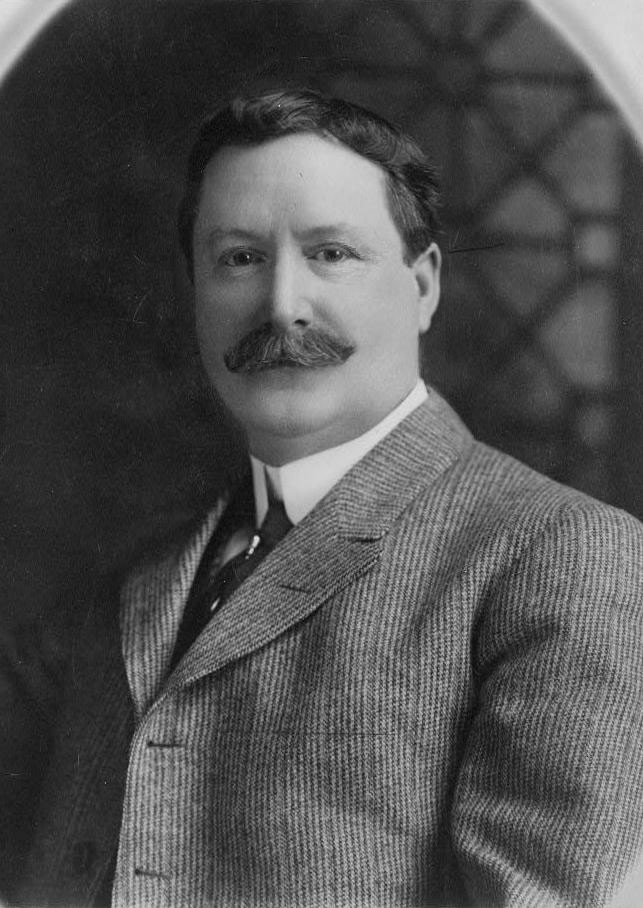
Solicitor General Hugh Manson Dorsey made his most detailed response on October 28. The Atlanta Journal reported him emphasizing the investigative resources available to Rosser and Arnold and saying the defense had searched Georgia with a “fine tooth comb” for anything capable of attacking a juror (The Atlanta Journal, 52).
Dorsey was arguing for the State, but his description fits the newspaper record of investigators following Henslee’s business route.
His broader point was useful.
How many conversations were actually independent?
How exact were the dates?
Why were some supposed listeners absent from the affidavit record?
What did the documents prove?
How many affidavits concerned reputation rather than direct observation?
Those were fair questions for Roan.
Dorsey Separates Anger at Mary’s Murderer From Prejudice Against Frank
Henslee admitted expressing anger toward whoever murdered Mary.
Dorsey argued a statement that Mary’s murderer deserved hanging was different from saying Leo Frank was guilty.
A person could believe the murderer deserved severe punishment while remaining uncertain about the murderer’s identity.
Frank’s lawyers therefore needed more than general anger toward the crime.
They needed reliable evidence showing Henslee had already decided Frank himself was guilty.
Dorsey’s Newspaper-Opinion Argument
Dorsey also argued that opinions formed from newspaper accounts did not automatically create legal disqualification.
This was especially important in Johenning’s case.
Johenning admitted discussing what the newspapers made the case look like.
The Loevenharts said he went much farther.
The dispute was whether Roan believed their account or his.
Dorsey’s “Gentile Race” and “Jewish Race” Reply
Under the newspaper heading “Denies Racial Feeling,” Dorsey began:
“In the name of the Gentile race and of all self-respecting members of the Jewish race”
and denied that hostility toward Frank arose because he was Jewish (The Atlanta Journal, 52).
Dorsey argued public feeling arose from belief in Frank’s guilt.
His statement does not prove anti-Jewish hostility was absent from Atlanta.
Arnold’s argument does not independently prove the two attacked jurors were disqualified by anti-Jewish prejudice.
The record establishes that the religious question was openly argued by both sides.
Was Henslee Proven Anti-Jewish?
No judicial finding established Henslee as anti-Jewish.
Samuel Aron and Dr. W. L. Ricker attributed explicitly anti-Jewish language to him.
Henslee denied both accusations.
The State attacked Aron’s credibility.
Roan rejected the juror-bias ground.
The Georgia Supreme Court later described the evidence as conflicting.
The proper historical language is therefore careful. Defense witnesses accused Henslee of anti-Jewish statements and fixed prejudgment. Henslee denied those accusations. The courts did not establish the individual statements as historical facts.
Wednesday, October 29, 1913: Dorsey Defends Both Jurors
The Atlanta Georgian reported Dorsey devoting extensive attention to Henslee and Johenning and strongly defending their integrity, with especially favorable remarks concerning Johenning’s conscientious character (The Atlanta Georgian, 53).
Later accounts often reproduce the dramatic accusations against Henslee while giving much less space to the State’s response.
The original controversy contained both.
Thursday, October 30, 1913: Eleven Henslee Accusers
The Atlanta Georgian reported eleven direct Henslee affiants and said Dorsey had sought to impeach three (The Atlanta Georgian, 55).
Rosser and Arnold argued the State would have attacked the other eight if it had been able.
This was a meaningful defense point.
It still did not solve the other problems in the evidence. A witness of excellent reputation can misremember a date, identify a person incorrectly, or remember the wording of a conversation more strongly than it occurred.
The number of witnesses mattered.
So did the quality of each account.
Friday, October 31, 1913: Judge Roan Denies Another Trial
Judge Roan denied Frank’s motion on Friday, October 31.
His written order was brief and did not contain separate credibility findings for every witness. It did not declare Samuel Aron a liar. It did not expressly say he accepted Henslee’s September 2 explanation. It did not provide a paragraph discussing every hotel record or affidavit.
A historian should not invent findings Roan never wrote.
The formal outcome nevertheless matters. Roan received the competing juror evidence, recognized the legal importance of proved prejudice, heard the lawyers, and denied the motion (Motion for New Trial, 2) (The Atlanta Journal, 56).
Roan’s Personal Doubt About Frank’s Guilt Was a Separate Question
Roan also expressed personal uncertainty about Frank’s guilt.
This belongs in the history but should remain separate from the Henslee and Johenning issue.
A judge can have personal uncertainty about the larger criminal case while still finding a particular procedural claim unproved.
Likewise, a truly disqualified juror could require another trial even if the prosecution evidence were otherwise strong.
The questions are different.
The Georgia Supreme Court later treated Roan’s formal ruling as controlling (Frank v. State, 1).
Saturday, November 1, 1913: The Legal Rule on Conflicting Juror Evidence
The Atlanta Constitution reported another Georgia appellate decision concerning post-verdict attacks on jurors and emphasized the trial judge’s responsibility for deciding conflicting testimony concerning juror qualifications (The Atlanta Constitution, 57).
The newspaper headline suggested the trial judge had the final word, which was somewhat simplified because appellate review still existed.
The underlying rule was genuine.
The trial judge first resolved the factual dispute.
The appellate court then reviewed whether he abused his discretion.
Tuesday, February 17, 1914: The Georgia Supreme Court Reviews Henslee
The Georgia Supreme Court directly addressed Henslee in Frank v. State, 141 Ga. 243, 80 S.E. 1016.
Ground 73 asserted Henslee had been prejudiced prior to selection and had expressed a decided opinion concerning Frank’s guilt.
The Court acknowledged evidence tending to show strong bias and prejudice.
It also acknowledged Henslee’s sworn denial.
The Court explained:
“when the impartiality of a juror is challenged on a motion for new trial, the judge becomes a trior as to the issue made.”
It then concluded:
“On the conflicting evidence there was no abuse of discretion in this case.”
(Frank v. State, 1).
This is the controlling legal language.
The Supreme Court did not say no evidence existed against Henslee.
It did not declare every defense witness dishonest.
It held that the evidence conflicted and that Roan was legally entitled to resolve the conflict.
The Supreme Court Reviews Johenning Separately
The Court then considered Marcellus Johenning.
It again recognized conflicting evidence and upheld Roan’s determination that Johenning had not been shown prejudiced or biased (Frank v. State, 1).
The Supreme Court therefore did not ignore the second juror.
It addressed him separately and upheld the trial judge.
Who Sat on the Georgia Supreme Court?
The six members of the Georgia Supreme Court deciding Frank’s first appeal were Chief Justice William H. Fish and Justices Beverly D. Evans, Joseph Henry Lumpkin II, Samuel C. Atkinson, Hiram Warner Hill, and Marcus W. Beck.
The four-man majority consisted of Samuel C. Atkinson, Beverly D. Evans, Joseph Henry Lumpkin II, and Hiram Warner Hill. Chief Justice William H. Fish and Justice Marcus W. Beck dissented over a separate evidentiary question involving testimony concerning Frank’s alleged prior sexual conduct.
Their published dissent did not find Henslee biased.
It did not find Johenning biased.
No reliable source located during this research identifies any of the six justices as Jewish. Several had documented Christian church associations, although religion should not be assigned where records remain incomplete. A justice’s religion also does not establish the quality of his ruling. The written opinions remain the proper evidence of how the Court handled Frank’s appeal.
The Four-to-Two Vote Was Not a Split Over Henslee and Johenning
The Georgia Supreme Court affirmed the conviction four to two.
The two dissenting justices disagreed on another evidentiary issue. Their published dissent did not say Roan mishandled Henslee or Johenning.
The four-to-two vote therefore should not be portrayed as a divided Supreme Court ruling over these two jurors.
C. W. Burke and the Defense Investigation
C. W. Burke connects the 1913 juror investigation with several later controversies concerning defense investigative methods.
Newspapers identified Burke as an agent for Rosser. He also served as notary on the Loevenhart affidavits.
A notary administers an oath.
The signature does not independently prove the story inside the affidavit is true.
Other officers administered the oaths on the principal Henslee affidavits, so Burke should not be portrayed as the man who notarized the entire juror case.
His later history still gives modern researchers reason to examine his methods carefully.
Burke and Ira Fisher
Burke became involved in the Ira W. Fisher episode, which produced a sensational accusation concerning another man in the Phagan case. Frank’s lawyers later distanced themselves from Fisher’s story (The Atlanta Journal, 58).
This shows a defense investigative lead could produce a dramatic story that later lost credibility.
It does not prove Burke invented the story.
Burke, George Epps, and “Kelly”
George Epps later signed a statement modifying parts of his earlier testimony and then repudiated it. Disputes arose involving investigators using assumed names, and N. A. Garner later identified a man called “Kelly” as Burke.
The episode occurred after Roan ruled.
It cannot explain the October 1913 decision.
It can be considered when examining Burke’s broader investigative history.
Burke and Albert McKnight
Albert McKnight later signed an affidavit favorable to Frank and then repudiated it. McKnight accused Burke of discussing possible employment and housing, while Burke denied buying testimony (The Atlanta Journal, 58).
The surviving evidence establishes a dispute involving witness handling and proposed assistance.
It does not conclusively establish a completed bargain exchanging false testimony for employment.
Thursday, June 18, 1914: Burke Is Indicted
The Atlanta Journal reported a Fulton County grand-jury indictment accusing Burke of attempted subornation of perjury in connection with a Ferguson witness (The Atlanta Journal, 59).
An indictment is an accusation.
It is not a conviction.
The date is also important. The indictment occurred more than seven months after Roan denied the first new-trial motion. Roan could not have relied upon it.
Burke’s later history justifies scrutiny.
It does not prove the Loevenhart affidavits were fabricated, purchased, or dictated.
What the Defense Investigation Actually Proved
The defense accomplished a great deal. It found multiple people willing to swear Henslee had expressed prejudicial opinions prior to trial. It located witnesses in several Georgia communities. It uncovered an important error in Henslee’s Albany travel account. It produced accusations involving violent and anti-Jewish language. It also found a Jewish Atlanta family claiming Johenning had expressed a firm belief in Frank’s guilt.
These were genuine pieces of evidence and should not be minimized.
The weaknesses appeared when the evidence was examined closely. Several witnesses described overlapping incidents. Some dates became uncertain. One documentary challenge helped the defense while another helped Henslee. Blakely failed. Sparta contained the summons problem. Virgil Harris publicly removed himself from an inaccurate report. Some witnesses were reluctant or required legal process. Other witnesses faced direct reputation attacks.
The evidence did not become conclusive simply because the file became large.
What the Defense Failed to Establish Conclusively
The defense did not establish an agreement between Henslee and Johenning to secure Frank’s conviction.
It did not independently prove the two jurors coordinated their conduct.
It did not prove Henslee’s doubtful ballot was a deliberate trick.
It did not eliminate the June 2 problem in Lehman’s original chronology.
It did not resolve the Sparta summons contradiction.
It did not confirm the Blakely rumor.
It did not establish Virgil Harris as another accuser.
It did not produce a contemporary recording of the Johenning-Loevenhart conversation.
The Albany documents proved an error in Henslee’s travel chronology.
They did not record his words.
These weaknesses gave Roan legitimate reasons to examine the affidavits cautiously.
Why Roan Could Reject the Claims Without Calling Every Accuser a Liar
Roan did not have to conclude every defense witness committed perjury.
A witness can be sincere and still be wrong.
Roan could believe someone remembered a genuine conversation but confused the date. He could accept the Albany records while remaining uncertain about Gremer’s exact quotation. He could view Lehman’s changing dates as weakening the first affidavit without deciding Lehman invented the whole story. He could believe the Sparta men remembered strong remarks but still find Henslee’s post-verdict explanation plausible.
He could also regard the Loevenharts and Johenning as sincere people remembering or interpreting one exchange differently.
He had the fellow-juror evidence.
He had the doubtful ballot.
He had character evidence on both sides.
He had impeachment evidence.
He had his own firsthand observations of Henslee and Johenning during almost a month of trial.
That is why rejection of the juror-bias claims does not require a theory in which every defense affiant was dishonest.
The Strongest Evidence Against Henslee
The defense had serious evidence against Henslee, and it should not be brushed aside. Several unrelated people in different communities accused him of already believing Frank was guilty. Samuel Aron and Dr. W. L. Ricker attributed explicitly anti-Jewish language to him. Some of the conversations unquestionably took place even though the exact words were disputed.
The July 8 Albany documents also exposed a real error in Henslee’s sworn travel account, and several defense witnesses had respected local character witnesses supporting them.
The case against Henslee was more than one unsupported rumor.
Those weaknesses in the juror’s own account should not be hidden because they are part of the story.
The Strongest Evidence Supporting Henslee
The State nevertheless had substantial evidence of its own. The Blakely accusation collapsed when the men questioned there did not support the damaging rumor. The June 2 Albany evidence weakened Julian A. Lehman’s original chronology. The Sparta account contained a serious problem because the alleged reference to Henslee already being summoned did not fit comfortably with his July 25 jury notice.
Virgil V. Harris was wrongly pulled into early reporting and publicly corrected the record. Some important accusers faced impeachment evidence. Henslee did not simply deny every conversation. In several cases he admitted the discussion and disputed the date, wording, or meaning.
The fellow jurors added another layer. Numerous jurors said they observed no prejudice from Henslee during the weeks they spent together. Several supported his account of the doubtful ballot, and a doubtful vote appeared in the newspaper immediately following the verdict, long prior to the later fight over his impartiality.
None of this proves every accusation against Henslee was false, just as the Albany mistake does not prove every accusation was true.
This is why “conflicting evidence” remains the best description.
The Strongest Evidence Against Johenning
H. C. Loevenhart, Jennie G. Loevenhart, and Miriam Loevenhart made prompt sworn accusations against Marcellus Johenning. H. C. described one conversation, while Jennie and Miriam described another. Miriam attributed a direct declaration of guilt.
Johenning admitted speaking with Jennie and Miriam.
If the family accurately remembered his words, the defense had meaningful evidence of prejudgment.
The Strongest Evidence Supporting Johenning
The contrary evidence was also substantial. H. C. Loevenhart, Jennie G. Loevenhart, and Miriam Loevenhart all belonged to the same family. Johenning denied the separate conversation attributed to him by H. C. Loevenhart and gave a detailed alternative account of his meeting with Jennie and Miriam.
He said his remarks were based on newspaper coverage and that he reserved judgment until he heard the trial evidence. No explicit anti-Jewish statement was attributed to him. Fellow jurors supported his conduct, character witnesses supported his reputation, contemporary reporting showed him actively considering trial evidence, and Judge Roan resolved the conflict in his favor.
Johenning’s own affidavit identified the Loevenharts as being of the same race and religion as Frank, meaning they were Jewish in the language used in 1913. Their shared Jewish identity does not prove favoritism, collusion, or dishonesty. It means possible ethnoreligious sympathy toward Frank can be considered as one possible human influence, just as possible anti-Jewish hostility must be considered when examining the Henslee accusations. Neither possibility should be presented as proved without evidence.
The Georgia Supreme Court expressly upheld Roan’s ruling concerning Johenning.
Why Judge Roan’s Decision Was Defensible
Roan occupied a position no later historian can reproduce. He lived through the trial in the same time, space, and place as the witnesses, lawyers, jurors, court officers, and crowd. He heard testimony in the order it developed, saw demeanor firsthand, and watched Henslee and Johenning throughout weeks of proceedings.
He later received the affidavit campaign layered on top of everything he had already observed.
Roan had the Albany contradiction.
He had the June 2 travel evidence.
He had Sparta.
He had Monroe.
He had Aron.
He had Stough.
He had Harrison.
He had the Loevenharts.
He had character evidence for both sides.
He had impeachment evidence.
He had fellow-juror affidavits.
He had the crowd evidence.
He heard Arnold.
He heard Dorsey.
He publicly recognized that proved juror prejudice could practically decide the motion.
Then he denied another trial.
Supporting Roan does not require claiming every defense witness lied. It requires recognizing the evidence contained enough conflict, weakness, contradiction, and uncertainty for a trial judge to resolve the issue without acting irrationally.
Why the Georgia Supreme Court Upheld Roan
The Georgia Supreme Court had a different role.
Roan weighed the disputed facts.
The appellate court reviewed whether he abused the discretion Georgia law gave him.
Regarding Henslee, the Court expressly called the evidence conflicting and found no abuse.
Regarding Johenning, it expressly upheld Roan’s determination that the juror was not prejudiced or biased (Frank v. State, 1).
This does not prove every defense affiant was mistaken.
It establishes that the record did not legally require the appellate court to overturn Roan’s factual resolution.
Final Assessment: Accusation, Evidence, and Judicial Judgment
The attack upon Atticus Haygood Henslee and Marcellus Johenning was a serious part of Leo Frank’s first effort to obtain another trial. Frank’s lawyers had every right to investigate. A death sentence gave them powerful reason to examine possible juror misconduct in detail.
Their investigation produced real evidence.
It also produced conflict.
Henslee faced substantial accusations, but those accusations were met with varying degrees of contradictory evidence, uncertain dates, weak identifications, overlapping conversations, impeachment evidence, failed leads, and alternative explanations. Several people accused him of fixed prejudgment, Samuel Aron and Dr. W. L. Ricker attributed explicitly anti-Jewish language, and documentary evidence exposed a real error in his Albany travel chronology.
Those weaknesses in Henslee’s own account should not be hidden. They are part of the story.
At the same time, the Albany inconsistency did not prove Gremer or Farkas correctly remembered every word Henslee said, and it did not make the remaining affidavits automatically true. The Blakely allegation failed, Lehman’s June 2 chronology weakened, the Sparta account contained a serious summons problem, Virgil Harris publicly corrected an inaccurate report, and some of the principal accusers faced impeachment evidence.
Henslee’s doubtful ballot was reported immediately after the verdict and later supported by fellow jurors. Numerous jurors who spent weeks with him said they observed no prejudicial conduct during the trial.
The Johenning case rested on a different foundation. His principal accusers were three members of one Jewish family. He admitted the main encounter with Jennie and Miriam while disputing their wording and meaning. His explanation tied his comments to newspaper reporting and reserved judgment for trial. The family’s shared Jewish identity with Frank is relevant background but does not prove favoritism.
The defense investigation itself deserves criticism without exaggeration. Some witnesses were reluctant. Stough said investigators pursued him for roughly two weeks. The Sparta men said they declined voluntary affidavits. Black and Thomas in Blakely were compelled to testify and then failed to confirm the accusation the defense had gone looking for. Prepared questions in Sparta introduced details witnesses did not always adopt in their answers. The affidavit campaign continued while newspaper publicity was already describing the allegations.
None of this proves a general conspiracy to fabricate evidence.
It does explain why Roan had reason to examine the affidavits rather than count them.
Dorsey’s October 28 rebuttal belongs in the story beside Arnold’s accusations. He challenged the investigative search, missing corroborators, uncertain dates, newspaper-based opinions, and the larger religious-prejudice claim. His memorable appeal “in the name of the Gentile race and of all self-respecting members of the Jewish race” shows the prosecution directly answering Arnold’s claim of anti-Jewish prejudice in 1913.
Judge Leonard Strickland Roan understood what the juror accusation meant. He said proved prejudice could practically decide the motion. He had the evidence in front of him and something no later historian can reproduce, his own firsthand experience of the trial, the witnesses, the jurors, their demeanor, the courtroom atmosphere, and the way the evidence developed in real time.
Roan denied another trial on Friday, October 31, 1913.
The Georgia Supreme Court reviewed the two jurors individually on Tuesday, February 17, 1914. Regarding Henslee, it described conflicting evidence and found no abuse of discretion. Regarding Johenning, it expressly upheld Roan’s determination that the juror was not prejudiced or biased.
The courts did not erase the accusations.
They did not declare every accuser dishonest.
They did not establish Henslee’s memory as perfect.
They did not make the questions about religious prejudice disappear.
They resolved a contested evidentiary record under Georgia law.
The strongest historical case supporting Judge Roan and the Georgia Supreme Court rests on the actual evidence. Frank’s attorneys uncovered accusations serious enough to investigate and argue, but their post-verdict affidavit campaign did not establish a record so clear, consistent, independently corroborated, and free from contradiction that Roan was legally required to throw out the verdict.
Georgia’s highest court agreed.
References
1. Supreme Court of Georgia. Tuesday, February 17, 1914. Frank v. State, 141 Ga. 243, 80 S.E. 1016. Ground 73, Johenning’s separate challenge, the trial judge’s discretion, crowd claims, and sufficiency of the evidence.
https://www.leofrank.org/library/nexus-lexus/141_Ga._243,_80_S.E._1016,_1914_Ga._LEXIS.PDF
2. Superior Court of Fulton County. 1913. State of Georgia v. Leo M. Frank: Motion for New Trial, Exhibits, Depositions, Certification, and Order.
https://www.leofrank.com/library/trial/leo-frank-motion-for-new-trial-3-exhibits-charge-to-jury.pdf
3. Superior Court of Fulton County. October 1913. New-Trial Record and State Counter-Affidavits. Includes Henslee and Johenning, fellow jurors, character evidence, travel material, crowd evidence, and impeachment affidavits.
https://www.leofrank.org/library/leo-frank-first-appeal-october-1913.pdf
4. The Atlanta Constitution. Tuesday, July 29, 1913. Jury information concerning A. H. Henslee and M. Johenning.
5. The Atlanta Journal. Monday, July 28, 1913. “Personnel of Frank Jury All Married Except One.”
6. Lamar County, Georgia, GaGenWeb. Marriage and burial records for Atticus Haygood Henslee and Elizabeth May Franklin Henslee.
7. Atlanta City Directory Company. 1912, 1914, 1916, and 1919. Entries concerning Atticus H. Henslee, Marcellus Johenning, Annie Johenning, Hodges Broom Works, and associated addresses.
8. The Atlanta Journal. Friday, August 1, 1913. “Lawyers Battle Over Testimony of Frank’s Nervousness.” Johenning’s question concerning the time-clock system.
9. The Atlanta Georgian. Tuesday, August 19, 1913. “Wife at Last Breaks Down, Overcome by Frank’s Story.”
10. Tarleton Collier. Sunday, August 24, 1913. “Frank Jurors an Enthralling Study in Human Emotion.” Hearst’s Sunday American, page 4A.
https://www.leofrank.org/enright-archive/atlanta-georgian-1913-08-24-full-pages.pdf
11. The Atlanta Journal. Sunday, August 10, 1913. “Playing Practical Jokes on Watchful Bailiffs Is Pastime of Frank Jurors.”
12. The Atlanta Constitution. Tuesday, August 26, 1913. “Only One Ballot Taken by Jury and Fate of Frank Was Decided.” Page 7.
13. The Atlanta Georgian. Tuesday, August 26, 1913. “Frank Guilty on First Ballot.”
14. The Atlanta Journal. Tuesday, August 26, 1913. “Twelve Peers of Leo M. Frank Who Found Guilty of Murder.” Initial ten-guilty, one-blank, one-doubtful report.
15. The Atlanta Constitution. Friday, September 26, 1913. “Did Not Discuss Guilt of Frank.” Page 5, column 1. L. E. Black and Walter Thomas of Blakely.
16. H. C. Loevenhart, Jennie G. Loevenhart, and Miriam Loevenhart. September 1913. Affidavits concerning Marcellus Johenning. Best reading of the inspected original exhibits supports September 2 for the three jurats. Available on the Mary Phagan-Kean Legacy Website, Georgia Supreme Court Leo Frank Appeals Documents, around Slides 0946–0947 and duplicate exhibit group around Slides 0262–0265.
17. Marcellus Johenning. October 1913. Counter-affidavit answering H. C. Loevenhart, Jennie G. Loevenhart, and Miriam Loevenhart. Includes the statement identifying the family as being of the same race and religion as Leo M. Frank. Available on the Mary Phagan-Kean Legacy Website, Georgia Supreme Court Leo Frank Appeals Documents, around Slides 0043–0046.
18. R. L. Gremer and Mack Farkas. Thursday, September 4, 1913. Albany affidavits concerning A. H. Henslee. Available on the Mary Phagan-Kean Legacy Website, beginning around Slide 0943.
19. Julian A. Lehman. Friday, September 12, 1913. First affidavit concerning two alleged Henslee conversations. Available on the Mary Phagan-Kean Legacy Website, around Slides 0944–0945.
20. John M. Holmes, Shi Gray, and T. M./S. M. Johnson. Friday, September 26, 1913. Sparta depositions. Available on the Mary Phagan-Kean Legacy Website, Georgia Supreme Court Leo Frank Appeals Documents, around Slides 0969–0972.
21. J. J. Nunnally and Dr. W. L. Ricker. Saturday, September 27, 1913. Monroe testimony concerning Henslee. Available on the Mary Phagan-Kean Legacy Website, around Slide 0974 and following.
22. C. P. Stough. Monday, September 29, 1913. Deposition concerning the College Park streetcar conversation. Available on the Mary Phagan-Kean Legacy Website, beginning around Slide 0968.
23. Samuel Aron. Friday, October 3, 1913. Affidavit concerning the alleged Elks Club conversation and anti-Jewish statement. Available on the Mary Phagan-Kean Legacy Website, around Slide 0945.
24. Atticus Haygood Henslee. October 1913. Sworn answer to the juror-bias accusations, including the 74 Oak Street address, jury notice, travel chronology, Monroe, Sparta, Albany, and doubtful ballot. Available on the Mary Phagan-Kean Legacy Website, beginning around Slide 0052.
25. Franklin Buggy Company, Mack Farkas, Sam Farkas, and B. W. Simon. Tuesday, July 8, 1913, with later authentication affidavits. Albany business order. Available on the Mary Phagan-Kean Legacy Website, beginning around Slides 0959–0961.
26. W. W. Little. Thursday, October 23, 1913. Affidavit concerning Henslee’s July 8 registration at the New Albany Hotel and room 79. Available on the Mary Phagan-Kean Legacy Website, around Slide 0303.
27. Julian A. Lehman. Monday, October 13, 1913. Supplemental affidavit concerning the less certain early-June date. Available on the Mary Phagan-Kean Legacy Website, around Slide 0962.
28. Leon Harrison. Wednesday, October 8, 1913. Affidavit concerning the alleged Peachtree Street conversation. Available on the Mary Phagan-Kean Legacy Website, around Slide 0296.
29. State counter-affidavits. Fellow jurors, character witnesses, impeachment witnesses, crowd evidence, and other material answering Frank’s juror-bias claims. Available on the Mary Phagan-Kean Legacy Website, Georgia Supreme Court Leo Frank Appeals Documents, beginning around Slide 0069 and surrounding records.
30. The Atlanta Journal. Wednesday, October 1, 1913. “Frank Motion Is Served on Solicitor.”
31. The Atlanta Georgian. Thursday, October 2, 1913. “Ask New Frank Trial on 115 Counts.”
32. The Atlanta Georgian. Friday, October 3, 1913. “Frank Trial Juror Denies Charge of Bias.” Stough’s description of repeated approaches by defense investigators.
33. The Atlanta Journal. Saturday, October 4, 1913. “Affidavits Attacking Frank Jurors Made Public.”
34. The Atlanta Constitution. Monday, October 6, 1913. “Sparta Citizens Insist Henslee Was Prejudiced.”
35. The Atlanta Constitution. Tuesday, October 7, 1913. “Made His Remarks About Leo Frank After Trial and Not Before, Says Juror Accused of Prejudice.”
36. The Atlanta Georgian. Tuesday, October 7, 1913. “Dorsey at Work to Combat Charge.” Henslee’s confrontation with Lehman.
37. The Atlanta Journal. Wednesday, October 8, 1913. “Frank Hearing to Be Postponed Another Week.” Virgil V. Harris’s correction.
38. The Atlanta Georgian. Wednesday, October 8, 1913. “Both Sides Confident in Frank Case.” Stiles Hopkins and the defense affiants.
39. The Atlanta Georgian. Monday, October 13, 1913. “Attack Is Renewed on Frank Juror.”
40. The Atlanta Georgian. Friday, October 17, 1913. “Sparta Citizens Attack Frank Trial Juror.”
41. The Atlanta Georgian. Monday, October 20, 1913. “Way Clear for Frank Battle.” Harrison and related allegations.
42. The Atlanta Georgian. Tuesday, October 21, 1913. State counter-affidavit coverage.
43. The Atlanta Constitution. Wednesday, October 22, 1913. “Many Affidavits Defend the Jury.”
44. The Atlanta Georgian. Thursday, October 23, 1913. “Judge’s Admissions Help Frank’s Chance.” Burke, the continuing investigation, and the defense search along Henslee’s sales territory.
45. The Atlanta Constitution. Friday, October 24, 1913. “Proof of Charges Will Mean a New Trial, Says Court.” Reports Roan’s October 23 courtroom statement.
46. The Atlanta Georgian. Friday, October 24, 1913. “Disputes Block Frank Speech.” Reports Roan personally reviewing the juror affidavits and counter-affidavits.
47. The Atlanta Georgian. Saturday, October 25, 1913. “Atlanta’s Prejudice as Bitter as Russia’s, Declares Attorney.” Arnold’s Beilis comparison.
48. The Atlanta Georgian. Monday, October 27, 1913. “Henslee Is Attacked as Cold Plotter.”
49. The Atlanta Journal. Tuesday, October 28, 1913. “Solicitor Dorsey Hammers Frank New Trial Motion.” Dorsey’s “fine tooth comb” argument and “Gentile race” and “Jewish race” rebuttal.
50. The Atlanta Georgian. Wednesday, October 29, 1913. State closing argument defending Henslee and Johenning.
51. The Atlanta Journal. Wednesday, October 29, 1913. “Frank New Trial Hearing to End This Afternoon.” Rosser’s doubtful-ballot argument.
52. The Atlanta Georgian. Thursday, October 30, 1913. “Frank Alibi Upheld by Rosser in Closing.” Reports eleven Henslee affiants and State impeachment efforts.
53. The Atlanta Journal. Friday, October 31, 1913. “Leo Frank’s Lawyers Prepare for Supreme Court Fight.”
54. The Atlanta Constitution. Saturday, November 1, 1913. “Trial Judge Says Last Word on Bias of Jury, Declares Court of Appeals.”
55. The Atlanta Journal. Tuesday, May 5, 1914. “Many Sensations Sprung by Dorsey at Frank Hearing.” Later Burke, Epps, and McKnight controversies.
56. The Atlanta Journal. Thursday, June 18, 1914. “C. W. Burke Indicted for Suborning Perjury.”
57. The Atlanta Georgian. Sunday, June 4, 1916. Henslee’s Georgia Prison Commission candidacy.
58. The Jeffersonian. Thursday, July 6, 1916. Henslee campaign publicity invoking the Frank controversy.
Georgia Supreme Court Appeal Record Slide Locator
The following original Georgia Supreme Court appeal records are available on the Mary Phagan-Kean Legacy Website. The individual slide URLs are intentionally omitted. The slide numbers and associated people are included so readers can locate the original records directly.
Slide 0052 and following — Atticus Haygood Henslee. Henslee’s sworn response, including his jury-notice account, travel chronology, Albany answer, Monroe answer, Sparta explanation, prejudice denials, and doubtful-ballot explanation.
Slides 0043–0046 — Marcellus Johenning. Johenning’s sworn response to H. C. Loevenhart, Jennie G. Loevenhart, and Miriam Loevenhart, including his description of the Loevenharts as being of the same race and religion as Leo M. Frank.
Slides 0943–0945 — R. L. Gremer, Mack Farkas, Julian A. Lehman, and Samuel Aron. Principal defense affidavits attacking Henslee.
Slides 0946–0947 — H. C. Loevenhart, Jennie G. Loevenhart, and Miriam Loevenhart. Principal affidavits attacking Johenning. C. W. Burke appears as notary.
Slides 0262–0265 — Loevenhart duplicate exhibit group. Additional copies useful for checking names, handwriting, dates, jurats, and transcription differences.
Slides 0968 and following — C. P. Stough. Stough’s deposition and commission concerning the College Park streetcar conversation.
Slides 0969–0972 — John M. Holmes, Shi Gray, and T. M./S. M. Johnson. Sparta depositions, including the June 27 date and disputed jury-service language.
Slides 0974 and following — Dr. W. L. Ricker and J. J. Nunnally. Monroe testimony concerning Henslee.
Slide 0296 — Leon Harrison. Harrison’s affidavit concerning the Peachtree Street conversation and later photographic identification of Henslee.
Slides 0959–0961 — Mack Farkas, Sam Farkas, B. W. Simon, Atticus Haygood Henslee, and the Franklin Buggy Company. July 8 Albany business evidence.
Slide 0303 and related records — W. W. Little and the New Albany Hotel. Henslee’s July 8 hotel registration and room 79.
Slide 0962 and related records — Julian A. Lehman, J. J. Nunnally, and Dr. W. L. Ricker. Supplemental affidavits and qualifications concerning dates.
Slide 0069 and surrounding records — State counter-affidavits. Fellow jurors, character witnesses, impeachment witnesses, hotel records, crowd evidence, and other material answering Frank’s juror-bias claims.
Slide 0965 and related records — Julian A. Lehman and C. P. Stough character evidence. Defense affidavits supporting the reputations of selected accusers.
Slides 0945–0948 — Luther Z. Rosser, Morris Brandon, Reuben R. Arnold, Herbert Haas, and Leo M. Frank. Affidavits concerning the defense’s claimed lack of knowledge of the Henslee and Johenning accusations during jury selection.
Slide 1717 — N. A. Garner, George Epps, C. W. Burke, and “Kelly.” Later affidavit relevant to Burke’s investigative history. This material arose after Roan’s October 1913 ruling.
Slide 1493 and surrounding records — C. W. Burke, Ivey Jones, Ruth Robinson or Robison, and the State’s May 1914 answer. Later State allegations concerning Burke-connected affidavits. These later accusations do not establish the earlier Henslee or Johenning affidavits as fraudulent.